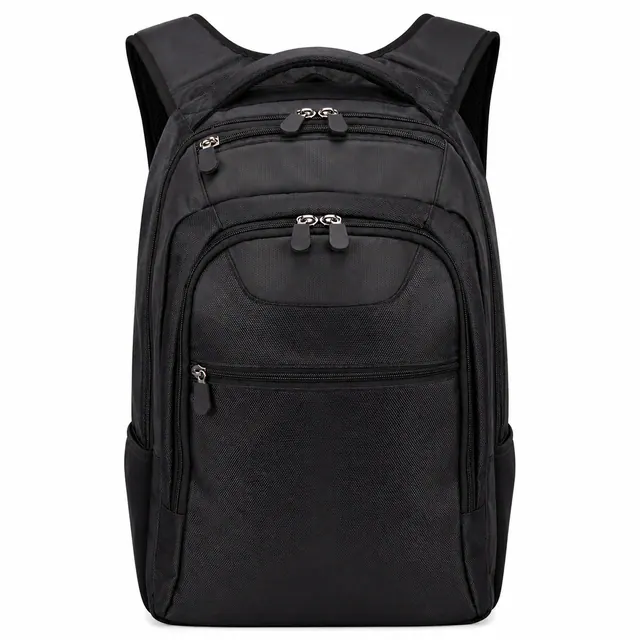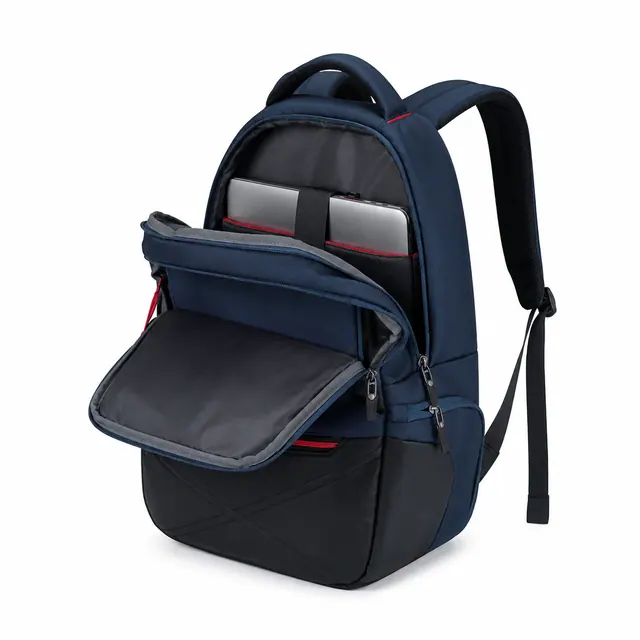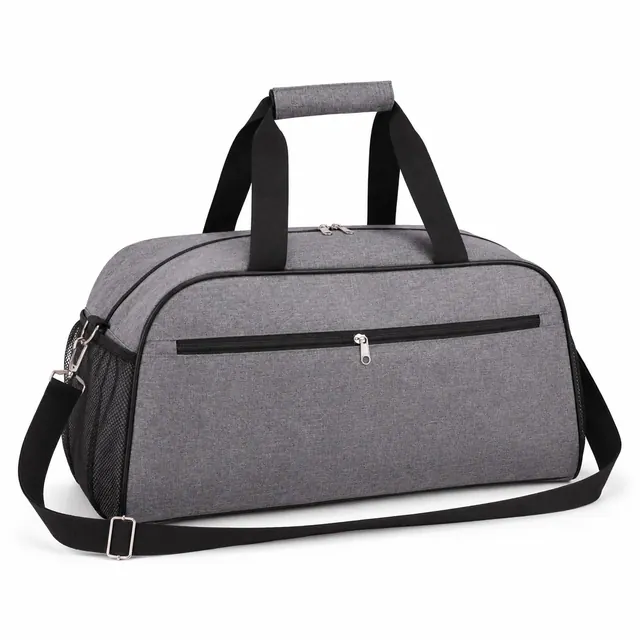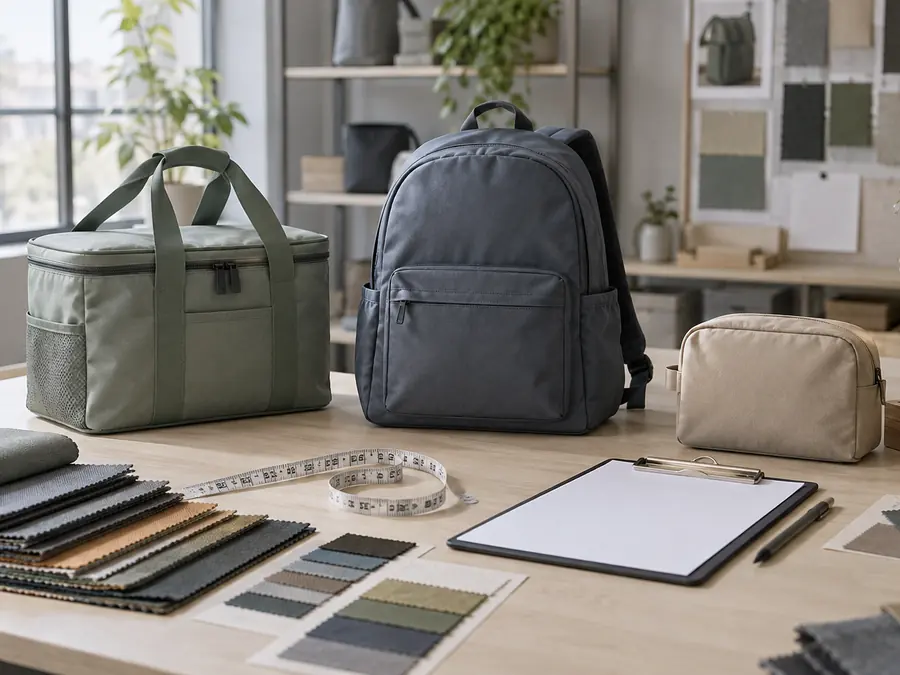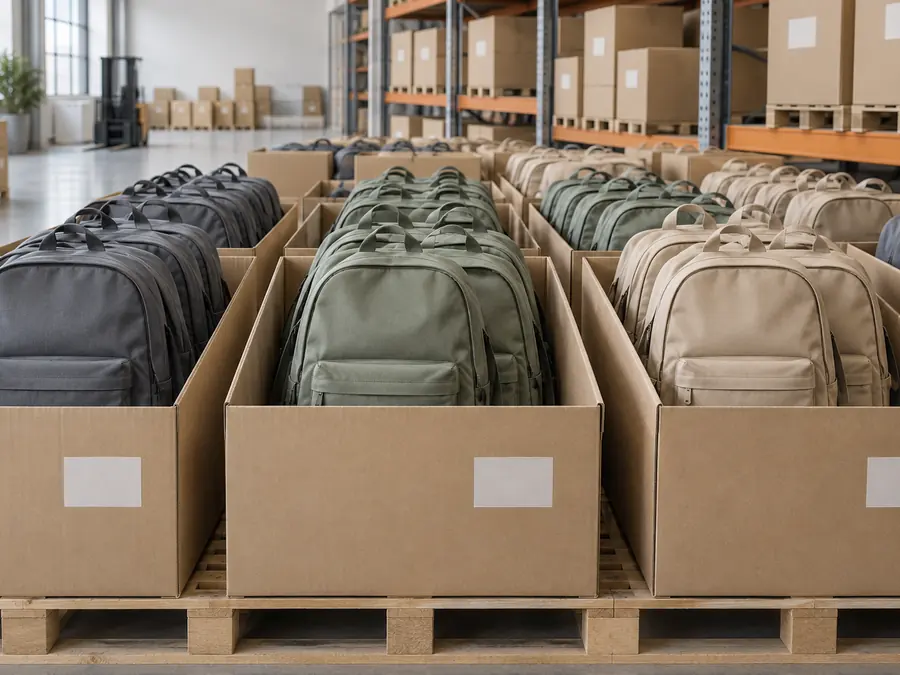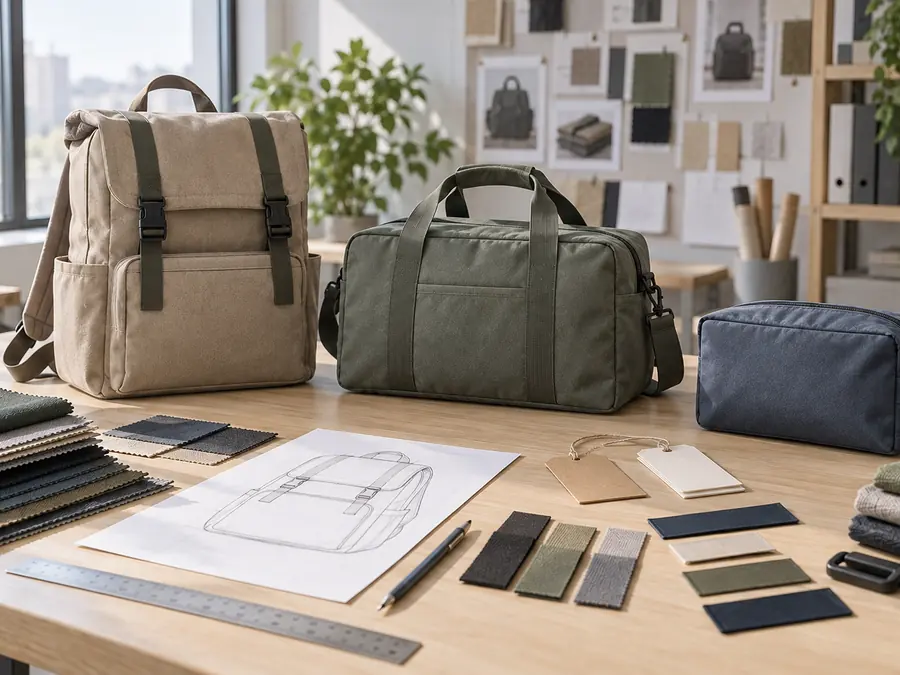
A private label bag is an existing, proven bag model made in your fabric, colours and branding and sold under your name. To launch a private label backpack, duffle or gym bag line, choose a tooled base model, fix the fabric and hardware, approve a counter sample with your logo and labels, then order from 500 pieces per colour. Allow seven to ten weeks from sample request to shipment.
Private label is the fastest honest route to your own bag line. Instead of paying to develop a pattern from nothing, you start from a model a factory has already cut, sewn and shipped, then change everything a customer actually sees: fabric, colour, webbing, zip pullers, print, labels and packaging. This guide walks through how a private label backpack, duffle or gym bag programme is put together, what it costs in time and minimums, and where buyers most often lose weeks.
It is written by the Eggroll Bags export desk in Shanghai. We hold the export contract and run quality control for partner factories in Jiangxi, Zhejiang and Guangdong, and the process below is the one we use on our own programmes.
What private label bags actually are
A private label bag is a stock or catalogue construction re-specified and branded for one seller. The pattern belongs to the supplier; the finished product, its colourway and its brand identity belong to you.
That is different from full OEM development, where you supply drawings and own a new pattern, and different from simply putting a logo on a generic promotional bag. If you are unsure which model suits you, our guide to OEM versus ODM for bags sets out the trade-offs. For most first lines, private label on a tooled base is the right call: the construction has already been through production, so fit and function surprises are rare.
Private label backpack, duffle or gym bag: which to start with
Start with the category your customers already buy from you or ask you for. If you have no data, a backpack is usually the easiest first SKU because it suits the widest range of buyers and ships compactly.
| Category | Typical buyer | What makes it look premium | Watch-outs |
|---|---|---|---|
| Private label backpack | Lifestyle, outdoor, school, corporate gifting | Heavier fabric (1680D), padded back panel, branded zip pullers, tonal webbing | Shoulder strap comfort and laptop sleeve size must be specified, not assumed |
| Private label duffle bag | Travel, sports clubs, gyms | Structured base, metal hardware, detachable padded shoulder strap | Bulky to ship; handle and strap anchor strength is critical |
| Private label gym bag | Fitness brands, studios, team kits | Ventilated shoe or wet compartment, mesh pockets, clean colour blocking | Wet compartments need a wipe-clean lining; zips take heavy daily use |
Our catalogue base models for these routes include a 1680D custom hiking backpack (33×14.5×49 cm), a school and laptop backpack in 1680D polyester and a large-capacity 600D gym bag with a side mesh pocket (55×23×28 cm). We do not list a dedicated travel duffle, so a private label duffle bag would either be built from the gym holdall, which is already a duffle-style shape, or developed from your brief.
How to launch a private label bag line, step by step
A private label programme moves through eight stages. Most delays come from stages two and four, where decisions get left open.
- Write a one-page brief. Target retail price, sales channel, quantity per colour, target markets and the two or three features the bag must have. A brief this short still saves a week of emails.
- Choose a base model. Pick the closest tooled model from the backpack range or the sports bag range. Note the dimensions you can change and the ones you cannot without new tooling.
- Specify materials. Shell fabric and denier, lining, foam or padding, webbing width, zip size and brand, buckle type. See our bag fabric guide for where 600D, 1680D and RPET each make sense.
- Lock colours. Give Pantone TCX or TPG references for fabric and Pantone C for print. Approve lab dips before bulk fabric is dyed.
- Design the branding. Decide the decoration method, label set and packaging (covered below).
- Approve a counter sample. A counter sample takes seven to twelve days, and the fee is credited against the bulk order. Check it against the brief, not against your memory of the catalogue photo.
- Book testing and bulk. Bulk production runs 25 to 35 days after sample approval, with about a week more in peak season (July to October).
- Inspect and ship. Inline checks, pre-shipment inspection, then sea freight of roughly 28 to 40 days to North Europe or the US East Coast.
Branding options for private label bags
The decoration method should match the fabric and the price point. A logo that cracks or peels is the fastest way to make a good bag look cheap.
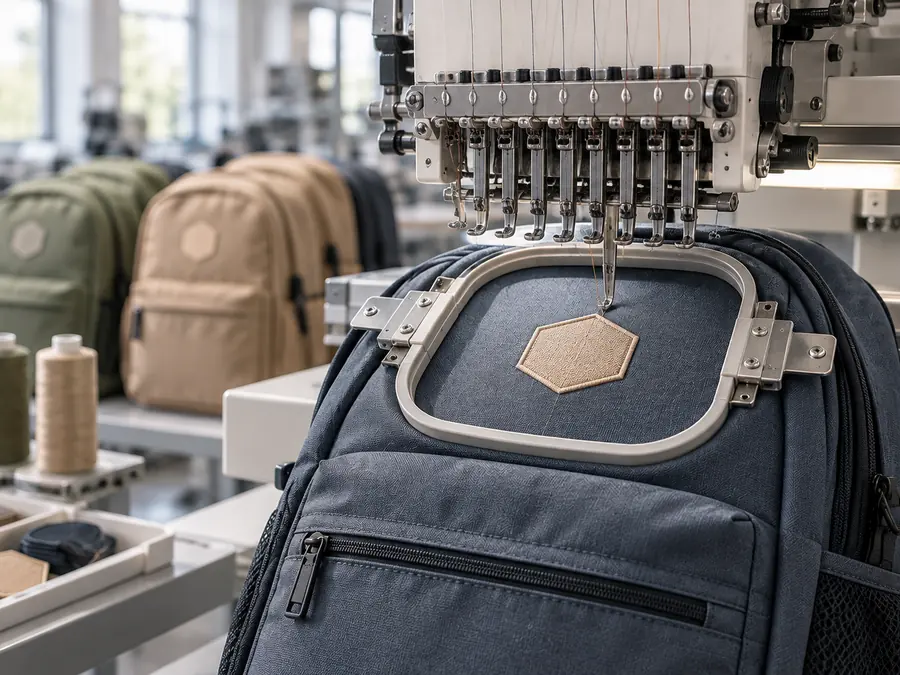
- Embroidery reads as premium on backpacks and duffles and survives abrasion well. Fine text below a few millimetres high loses definition.
- Woven labels sewn into a seam or onto the front panel are the classic private label signal and work on every fabric.
- Silicone or PU patches give a raised, modern look on gym bags and are easy to wipe clean.
- Screen print is economical for one- or two-colour logos on flat panels.
- Heat transfer handles multi-colour artwork and gradients on smaller areas.
- Sublimation and full-surface sublimated fabric allow all-over patterns on polyester, which suits fashion-led lines.
Small details carry a lot of brand value for little cost: a moulded or printed zip puller, tonal webbing in your brand colour, a printed lining, and a hang tag with your story. Put these on the sample so you can judge them in the hand.
Labels, packaging and compliance for your own bag brand
Retail-ready private label bags need more than a logo. The label set and packaging are usually where a first order is held up, because nobody owned them.
Plan for a brand label, a care and composition label, a country-of-origin marking, and any market-specific information your retailer requires. Add your barcode on the hang tag or polybag, and agree carton marks and carton dimensions early, because they drive freight cost. Our article on private-label packaging, barcodes and shelf readiness covers this in detail and applies equally to backpacks and gym bags.
On testing, product reports are issued per model and per market in the buyer's name. Depending on where you sell, that may include an EU REACH test, California Proposition 65, phthalates and, for children's products, EN 71-3 or CPSIA testing. Children's school backpacks need their own test plan; ask before you commit to a kids' version of an adult model.
Minimum order quantities and timeline
For a catalogue model, the minimum is 500 pieces per colour. For a new pattern or a custom-dyed colour, it rises to 1,000 pieces per colour, because the fabric mill has its own minimum dye lot.
| Stage | Typical time | What you approve |
|---|---|---|
| Brief and quotation | Written reply within one working day | Base model, materials, price basis |
| Counter sample | 7–12 days | Construction, colour, branding, labels |
| Bulk production | 25–35 days (about a week more July–October) | Inline reports at 20% and 80% |
| Pre-shipment inspection | Before loading | AQL 2.5 major / 4.0 minor result |
| Sea freight | 28–40 days to North Europe or US East Coast | Booking, documents, Incoterm |
If you want to test a market before committing, keep the first order to one base model in two colours. That keeps you at 1,000 pieces total and gives you real sell-through data before you widen the range. Unit price falls as quantity per colour rises, so ask for price breaks at two or three quantities on the same quotation.
Quality control that protects your brand
With a private label, every defect carries your name, so inspection is not optional. We check production inline at 20% and 80% completion, then run a pre-shipment inspection to ISO 2859-1 General Level II at AQL 2.5 for major and 4.0 for minor defects.
The on-site tests that matter most for backpacks and gym bags are the zip cycle test (50 cycles), a handle pull at 5 kg held for 60 seconds, a print rub test on the logo and a carton drop. If your bag has a wet compartment or an insulated pocket, add a liner leak check. Put the test list in the purchase order so it is a contractual requirement, not a favour.
Private label bag checklist before you place the order
- Base model reference and any agreed dimension changes
- Shell, lining, padding, webbing, zip and buckle specification in writing
- Pantone references and approved lab dips
- Decoration method, logo size and position marked on a drawing
- Full label set: brand, care, composition, origin, barcode
- Packaging: polybag, hang tag, inner and master carton marks
- Test reports required for each market, in your company's name
- Approved counter sample, signed and kept as the reference
- Incoterm (EXW, FOB Shanghai or Ningbo, CIF or DDP) and payment terms
Payment is normally a 30% T/T deposit with the balance of 70% against a copy of the bill of lading; an L/C at sight is accepted on orders above USD 30,000.
Where to start
Look at the travel and work carry range project for an example of a line built on shared hardware, then send your brief through the quote request form. Tell us the category, quantity per colour and target market, and we will suggest the closest base model and reply in writing within one working day.
Frequently asked
What is the minimum order for a private label backpack?
On a catalogue backpack the minimum is 500 pieces per colour. If you want a new pattern or a fabric dyed to a custom colour, the minimum becomes 1,000 pieces per colour because the fabric mill dyes in fixed lots. Starting with one model in two colours keeps a first order at about 1,000 pieces while still giving you a choice on shelf.
Can I make a private label duffle bag without developing a new pattern?
Often, yes. A duffle-style gym holdall can be re-specified with heavier fabric, metal hardware, a structured base and a padded shoulder strap so it works as a travel duffle. If you need a specific size or a shoe tunnel the base model does not have, that becomes a pattern change, which adds sample rounds and moves the minimum to 1,000 pieces per colour.
How long does it take to launch a private label gym bag?
Allow seven to twelve days for a counter sample, then 25 to 35 days for bulk once the sample is approved, plus about a week in the July to October peak. Sea freight to North Europe or the US East Coast adds 28 to 40 days. In practice, plan roughly three months from first brief to stock in your warehouse.
Who owns the design of a private label bag?
The underlying pattern of a catalogue model stays with the supplier, so another buyer could order the same shape. Your fabric, colourway, artwork, labels, packaging and brand are yours. If shape exclusivity matters, agree an exclusivity clause with a defined territory and term, or fund an OEM pattern that you own outright under the contract.
What testing do private label bags need?
It depends on the market and the user. Common reports include EU REACH, California Proposition 65 and phthalates; children's bags may also need EN 71-3 or CPSIA testing. Reports are issued per model and per market in the buyer's name, so tell your supplier every country you plan to sell in before the sample stage.