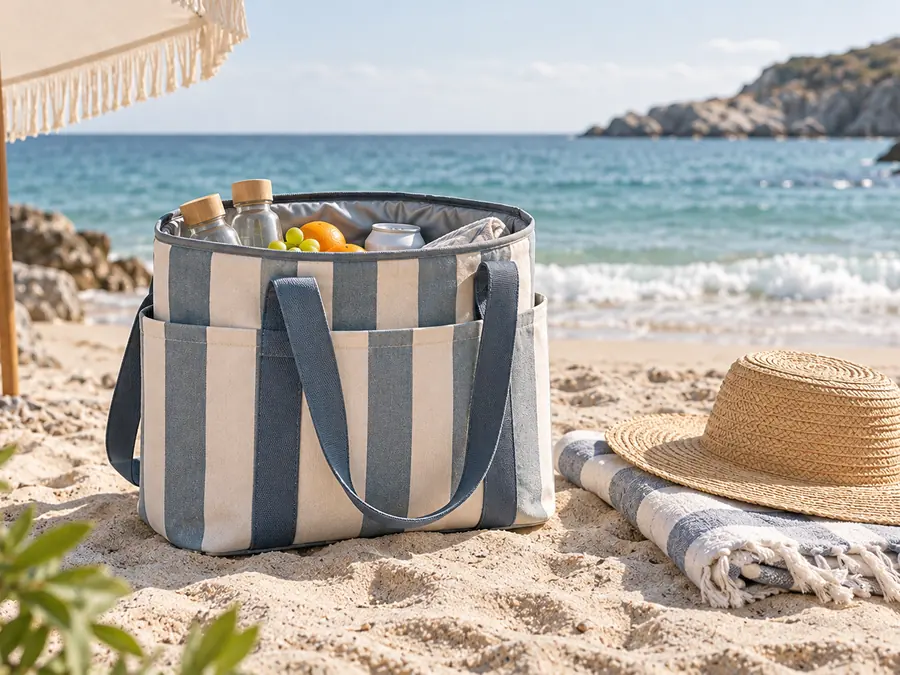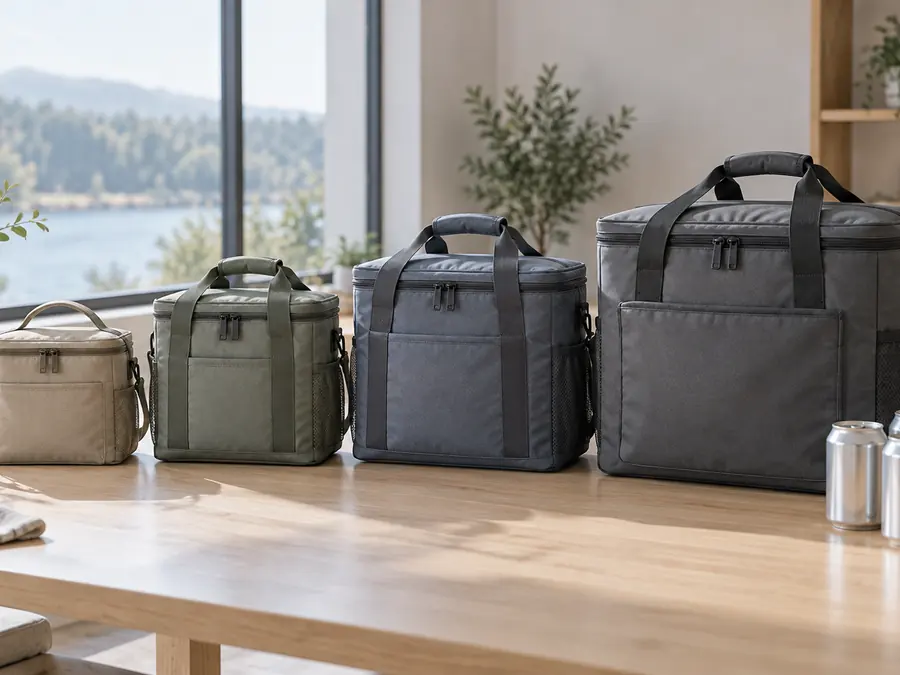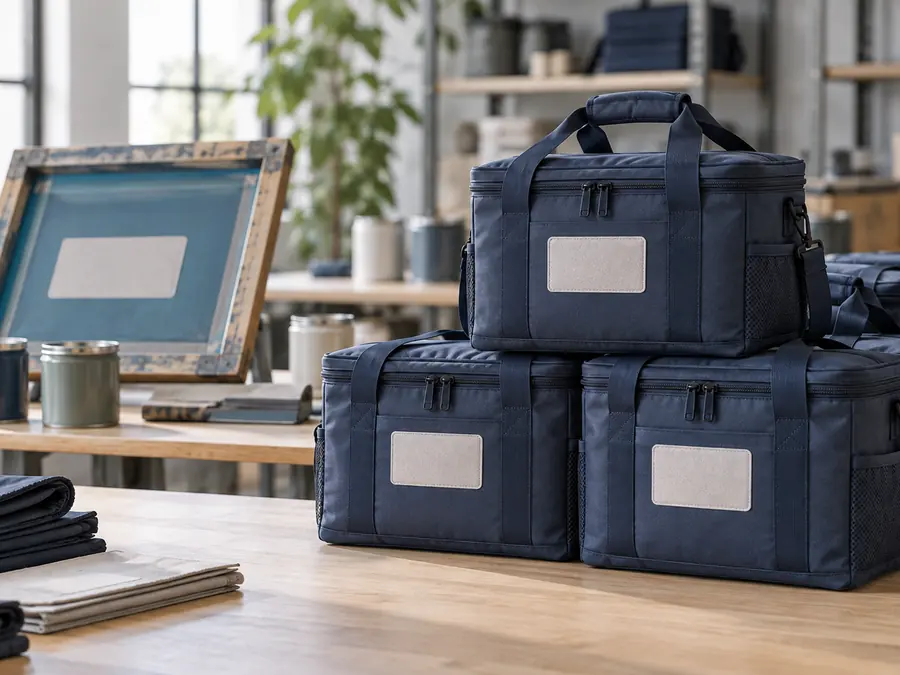
A retail-ready private-label lunch bag needs six things beyond the bag itself: a GS1 barcode you own (not the supplier's), a care and content label meeting the destination market's textile labelling rules, retail packaging in the format the buyer specified (polybag with header card, or a hangtag on a hook-ready bag), a compliance pack including REACH SVHC and, for children's lines, EN 71-3, an inner and master carton structure that matches the retailer's pallet pattern, and a substantiated cold-hold claim if you print one.
Selling an own-brand lunch bag into a supermarket is a different exercise from selling one on a marketplace. The bag is maybe 60% of the work. This is the other 40%, in the order a retail buyer will ask for it.
1. The barcode question, settled early
Buy a GS1 company prefix in your own country and allocate your own GTINs. It costs a modest annual fee and it is yours permanently.
What you need per SKU:
- A retail GTIN-13 (or UPC-A for North America) on the item packaging.
- An ITF-14 or GS1-128 on the master carton, if the retailer asks for it.
- A scannable, correctly quiet-zoned print — verified, not just designed. Ask for a scan test at inspection.
2. Labelling that satisfies the destination market
Typical requirements for an insulated bag sold in the EU and UK:
- Fibre composition ("100% polyester") on a permanently attached label
- Country of origin
- Importer or responsible-person name and address inside the EU, and separately inside the UK post-Brexit
- Care symbols
- For children's lines: age grading and any applicable warnings
For the US: country of origin marking, and Prop 65 warning where applicable in California. Get this signed off by your own compliance function; it is one of the few areas where being wrong is expensive rather than annoying.
3. Retail packaging formats
The three we build most often:
- Polybag with a printed header card — cheap, ships flat, hangs on a hook. The default for grocery and discount.
- Hangtag on the bag with a swing ticket and a folded belly band — used where the product is displayed loose in a dump bin.
- Printed carton or sleeve — premium and gift programmes; adds real cost and CBM.
Each has a cost: a printed header card and polybag runs roughly USD 0.12–0.30 per unit at retail quantities; a printed sleeve is USD 0.35–0.90.
Whatever format you choose, ask for a packaging dummy with the sample. Reviewing artwork on screen and reviewing it wrapped around the actual product are different activities, and the second one is where the mistakes are found.
4. Carton structure that matches the pallet
Retailers care about pallet efficiency more than most first-time suppliers expect. Get the retailer's pallet specification (EUR pallet 1200×800, or GMA 48×40 in the US), then work backwards to a master carton footprint that tiles cleanly. A carton that wastes 12% of the pallet face will be raised at every review.
Ask your supplier for: pieces per inner, inners per master, master carton dimensions, gross and net weight, cartons per pallet layer and layers per pallet.
5. The compliance pack
For an adult insulated lunch bag into the EU/UK, the pack usually contains:
- REACH SVHC screen on liner and outer fabric
- Phthalate test where a plasticised print or PVC component exists
- Food-contact migration test on the liner if it touches unwrapped food
- Azo dye and formaldehyde tests where the retailer's standard requires them
- A GRS transaction certificate for recycled-content claims
- The supplier's social audit report — amfori BSCI or SMETA
For a children's lunch bag add EN 71-3 (migration of certain elements) and small-parts assessment.
We run these through third-party laboratories and issue the reports in the importer's name, which is what retailer onboarding portals require.
6. Substantiating the performance claim
If the pack says "keeps cold for 8 hours", somebody should be able to produce the test. We can run a timed temperature log on the approved sample — thermocouple inside, gel pack weight recorded, ambient controlled — and you print the number that log supports. It is a cheap piece of insurance and it is increasingly requested.
The timeline behind a seasonal listing
| Week | Milestone |
|---|---|
| 0 | Listing confirmed; brief issued |
| 1–2 | Quotation, construction agreed |
| 3–4 | Counter sample and packaging dummy |
| 5 | Sample approval, artwork sign-off, testing booked |
| 6–7 | Materials booked, test reports issued |
| 8–12 | Bulk production, inline checks |
| 13 | Pre-shipment inspection, documents drafted |
| 14 | Container sails |
| 18–22 | Arrival, customs, DC |
Fourteen weeks from listing confirmation to sailing is a comfortable schedule. Ten weeks is achievable if the construction is a catalogue model and the artwork is ready on day one. Under eight weeks, something is being skipped — usually testing.
Start from a proven model
Every model in the insulated lunch bag range is already tooled, which removes the pattern development stage from the schedule above. Add the candidates to an inquiry list and send them as one request — you will get construction, carton data and a packaging cost per unit for each.
Frequently asked
Whose barcode goes on the product?
Yours. Buy a GS1 prefix in your own country and issue your own GTINs. Suppliers who offer to 'provide barcodes' are usually reselling a number from a pool, which many retailers reject at onboarding and which you cannot take to another supplier later.
Can I print '12 hours cold' on the packaging?
Only if you can substantiate it for that construction. UK, EU and Australian retailers increasingly ask for the test behind a performance claim, and the liability sits with the importer whose name is on the pack. Run a timed temperature test on the approved sample and print the number the log supports.
What labelling is legally required?
It depends on the market: fibre composition under the EU textile regulation, country of origin for the US, a responsible-person address in the EU and UK, care symbols, and safety warnings for children's items. Confirm with your own compliance team or customs broker for the destination — a supplier's opinion is not a legal basis.