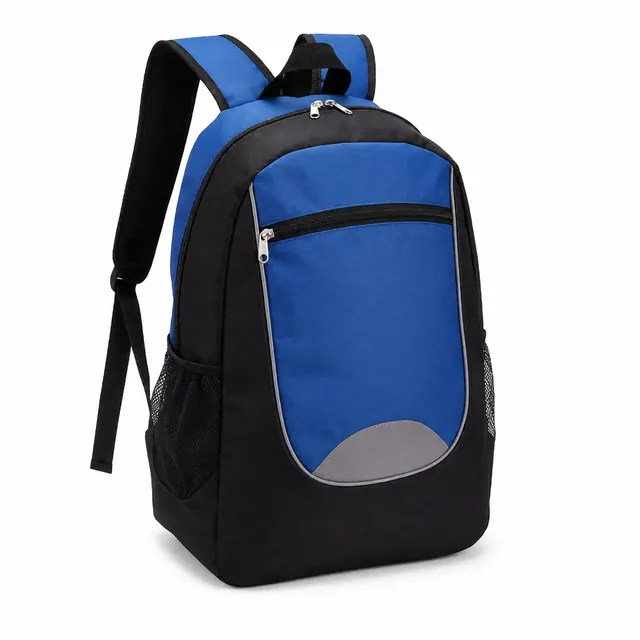
A good wholesale school backpack range covers two or three age-based sizes, uses coated 600D or 1680D polyester with bar-tacked strap anchors, and carries the right test reports for each market, such as EN 71-3 or CPSIA. For back-to-school stock in a warehouse by early July, brief by March, approve samples by mid-April and ship by late May.
Backpacks for school are one of the most predictable categories in bags: the season comes every year, children need a new school bag more often than parents would like, and retailers, schools and charities buy them in bulk. What is not predictable is the calendar. Back-to-school backpacks that arrive two weeks late sell at a discount, so range planning is as much about dates as about design.
This guide from the Eggroll Bags export desk covers what makes the best school backpacks for each age group, the construction and testing that matter, and a working timeline for bulk backpacks.
What makes the best school backpacks?
The best school backpacks fit the child, survive a full school year and carry the test reports your market requires. Design and colour sell the bag; construction decides whether it comes back.
- The right size for the age. The backpack should sit between the shoulders and the small of the back, not hang below the waist.
- Padded, adjustable straps anchored with bar-tacks, plus a padded back panel. A sternum strap helps on larger sizes.
- Durable coated fabric and a reinforced base, because school bags are dropped, dragged and kicked.
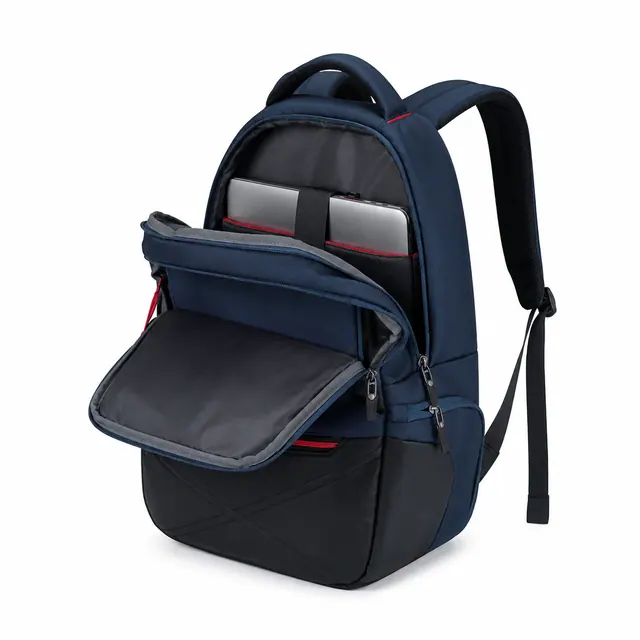
- Sensible organisation: a main compartment for books, a front pocket for small items, side bottle pockets and, for older students, a padded laptop sleeve.
- Correct test reports for children's products in each market where the bag is sold.
A widely cited guideline is that a loaded school backpack should weigh no more than about 10–15% of the child's body weight. A bag cannot enforce that, but a sensible capacity for each age group helps.
School bag sizes by age group
Most ranges need three sizes: primary, middle school and high school. The table gives typical proportions, with real catalogue examples.
| Age group | Typical body size | Approx. capacity | Key features | Catalogue example |
|---|---|---|---|---|
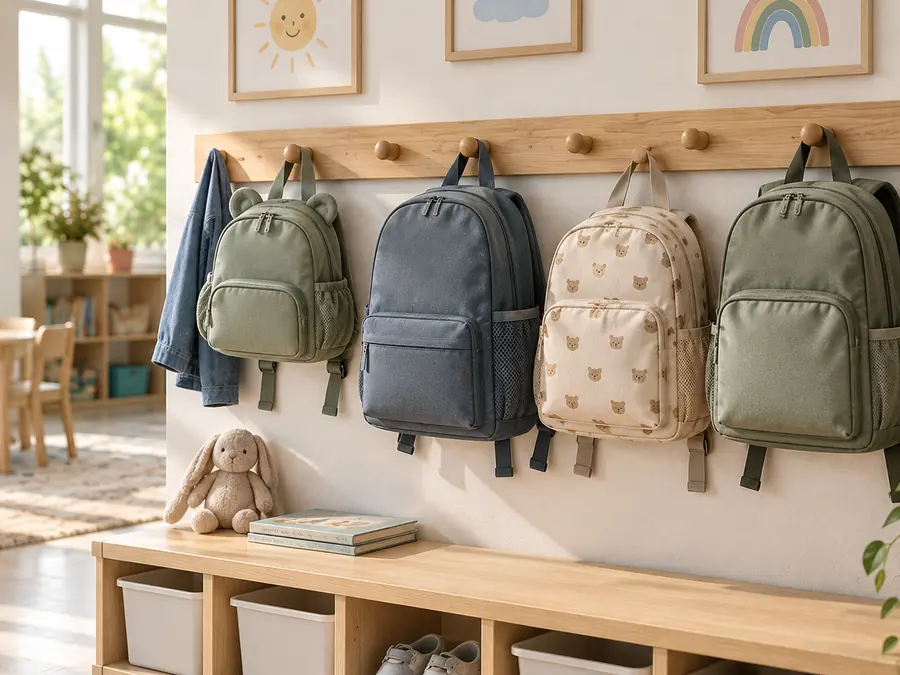
| Primary (about 5–10) | 28–31 cm wide, 38–42 cm tall | 12–18 L | Light weight, bright prints, name label, reflective trim | kids' school backpack, 31.5 × 16.5 × 45 cm |
| Middle school (about 11–14) | 30–32 cm wide, 42–46 cm tall | 18–25 L | More pockets, bottle sleeves, stronger straps | colourful school backpack, 31 × 19 × 46 cm |
| High school (about 14–18) | 30–33 cm wide, 41–48 cm tall | 15–30 L | Padded laptop sleeve, neutral colours, 1680D options | teen school and laptop backpack, 31 × 12 × 41 cm |
Capacity is outer volume, calculated simply: 31.5 × 16.5 × 45 cm is about 23 litres. Usable space is a little less once padding and pockets are accounted for. Big or extra-large backpacks for school above 30 litres tend to get overloaded, so we usually advise against them for younger students.
Fabrics and construction for a school bag that lasts a year
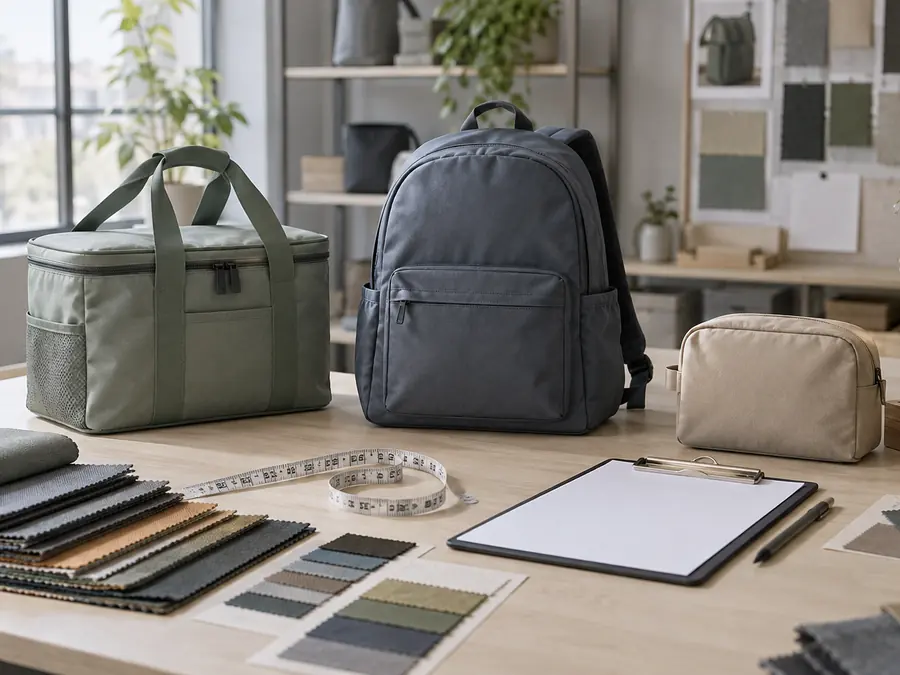
For most school backpacks, PU-coated 600D polyester is the right fabric; 1680D is worth the extra cost for high school and premium lines. The stitching matters as much as the fabric.
- 600D polyester takes prints and colours well and keeps cost under control. Specify weight in g/m² as well as denier.
- 1680D polyester has a ribbed, hard-wearing surface and looks premium. Our custom school and laptop backpack uses 1680D.
- RPET 600D typically costs 8–15% more than virgin 600D; a GRS transaction certificate is what supports a recycled-content claim.
- Stress points: bar-tacks at strap anchors and the top handle, binding on internal seams, and a doubled or coated base panel.
- Zips: a larger gauge on the main compartment, with pullers small hands can grip.
During production we run inline checks at 20% and 80%, then a pre-shipment inspection to ISO 2859-1 General Level II, AQL 2.5 major and 4.0 minor, including a 50-cycle zip test, a handle pull test (5 kg for 60 seconds), a print rub test and a carton drop.
What testing do children's school backpacks need?
Children's backpacks need product test reports for the market where they are sold. We arrange these per model and per market, issued in the buyer's name.
Typical reports include EN 71-3 (migration of certain elements) for children's products in Europe, CPSIA testing for US children's products, phthalates testing, REACH SVHC, and Prop 65 for California. Which ones apply depends on your market, the age group the bag is marketed to, and the materials and decoration used. Testing shows that a sampled product met specific requirements; it is not a blanket safety guarantee, and your compliance team should confirm the list for each channel. Build testing time into the plan once the sample is approved, because reports are tied to final materials and colours.
Tote bags for school: where they fit
A tote bag for school suits older students and teachers carrying light loads; for heavy books, a backpack spreads weight far better. Tote book bags are mostly a style choice for high school and college.
We do not list a dedicated school tote or canvas book bag in the catalogue. If a tote belongs in your range, send us a brief with the size and fabric and we will tell you honestly whether it fits our partner factories. In the meantime, coordinated sets of a backpack, a matching pencil case and a lunch bag tend to raise basket value more than adding a tote.
Back-to-school backpack order timeline
Work backwards from the date stock must be in your warehouse. For back-to-school selling in July and August, that is usually early July.
- By early March: brief with sizes, colours, prints and quantities; confirm catalogue models or new patterns.
- Mid to late March: counter samples, 7–12 days; lab dips for custom colours.
- By mid-April: approve samples and book third-party testing on the approved materials.
- Mid-April to mid-May: bulk production, 25–35 days after sample approval, with inline checks at 20% and 80%.
- Mid to late May: pre-shipment inspection and loading from Shanghai or Ningbo.
- June: sea freight, 28–40 days to North Europe or the US East Coast.
- Early July: stock in warehouse, ready for back-to-school.
This calendar keeps production clear of the July–October peak, when lead times stretch by about a week. Southern Hemisphere school years start in January or February, so those ranges should finish production before the Lunar New Year factory closure.
Building a bulk backpack range with tiers
A tiered range lets one development cycle serve several price points. Keep construction standards consistent and vary fabric, features and decoration.
- Entry tier: polyester body, simple front pocket, one or two print designs. Our school bags and pencil cases range includes lightweight foldable options.
- Core tier: 600D, more organisation, padded back, three or four colours.
- Premium tier: 1680D, padded laptop sleeve, neutral colours, woven label or PU patch.
- Add-ons: matching pencil cases, such as the customizable pencil pouch, and lunch bags in the same print.
Our back-to-school backpacks and lunch kits project shows a coordinated range built this way.
MOQ and practical limits on wholesale backpacks
MOQ is 500 pieces per colour on a catalogue model and 1,000 pieces per colour for a new pattern or custom-dyed colour. Full-surface sublimated prints count as a new pattern.
Payment is 30% T/T deposit and 70% against a copy of the bill of lading, with L/C at sight available above USD 30,000. Terms can be EXW, FOB Shanghai or Ningbo, CIF or DDP. For schools and charities buying bulk backpacks for donation, a single catalogue model in two or three colours with a one-colour logo is usually the most cost-efficient route.
Frequently asked
What size backpack is best for middle school?
For students aged about 11–14, a backpack around 30–32 cm wide and 42–46 cm tall, roughly 18–25 litres, suits most needs. It should sit between the shoulders and the small of the back. Look for padded adjustable straps, side bottle pockets and enough organisation to keep heavy books close to the back.
What makes a good high school backpack?
A good high school backpack has a padded laptop sleeve, a hard-wearing fabric such as 600D or 1680D coated polyester, bar-tacked strap anchors and a reinforced base. Neutral colours and a clean look suit this age group. Capacity of 15–30 litres covers most timetables without encouraging overloading.
When should I order back-to-school backpacks?
For stock in a warehouse by early July, brief by early March, approve samples by mid-April and ship by late May. Bulk production takes 25–35 days after sample approval and sea freight to North Europe or the US East Coast takes 28–40 days. Leave time for product testing on the approved sample.
What is the MOQ for bulk backpacks?
For a catalogue school backpack, the MOQ is 500 pieces per colour, with your logo. For a new pattern, a full-surface sublimated print or a custom-dyed colour, it is 1,000 pieces per colour. A counter sample takes 7–12 days, and the sample fee is credited against the bulk order.
What test reports do children's backpacks need?
It depends on the market. Common reports include EN 71-3 for children's products in Europe, CPSIA for US children's products, phthalates, REACH SVHC and Prop 65. We arrange reports per model and market, issued in the buyer's name. Your compliance team should confirm the exact list for each sales channel.