OEM means you supply the design and the factory builds exactly that — you own the pattern, you carry development cost and time, and nobody else can sell your shape. ODM means you start from the factory's existing tooled model and change fabric, colour, print, hardware and packaging — you reach market three to six weeks faster and far cheaper, but the silhouette is not exclusive. Most first programmes should be ODM; move to OEM once the volume justifies owning the tooling.
The two acronyms get used loosely in supplier emails, so let us define them the way the factory floor uses them.
OEM — Original Equipment Manufacturer. You bring the design. The factory makes the pattern from your drawings or your physical sample, cuts new tooling, and produces to your specification. You pay for development. The resulting pattern is, if your contract says so, yours.
ODM — Original Design Manufacturer. The factory already has a tooled, proven model. You change materials, dimensions within limits, colours, hardware, print, lining, labels and packaging. Development is a fraction of the cost and time.
The decision in one table
| OEM | ODM | |
|---|---|---|
| Who designs | You | The supplier, modified by you |
| Development cost | USD 300–1,200 + hardware tooling | Usually just a sample fee |
| Time to first bulk | 12–16 weeks | 7–10 weeks |
| Shape exclusivity | Yes, if contracted | No |
| Risk of a fit or function surprise | Higher — it is new | Lower — the model has run before |
| Sensible starting quantity | 1,000+ per colour | 500 per colour |
| Best when | The product is the brand | Speed, cost and range breadth matter |
When ODM is the right answer
- You are testing a category and need to know whether it sells before you invest in tooling.
- You are a promotional distributor and the client cares about the logo and the landed price, not the silhouette.
- You are filling out a seasonal range where the hero product carries the identity and the rest are supporting items.
- Your window is short — a retailer confirmed a listing and you have ten weeks.
Almost every successful first order we ship is ODM. The buyer picks a proven model from the catalogue, changes fabric and colourway, adds their print and packaging, and gets to market before their competitor has finished approving a pattern.
When OEM earns its cost
- The shape is the differentiator — a distinctive silhouette people recognise on a shelf.
- You have volume: above roughly 5,000 pieces a year on one model, the development amortises to noise.
- You need a function that does not exist — a specific compartment layout, an integrated hard liner, an unusual opening.
- You are building a line, and the family resemblance across three or four SKUs is part of the plan.
The hybrid most experienced buyers actually use
Take an existing tooled model and change enough that it reads as yours: a different closure, a panel split, custom webbing colour, a moulded logo puller, your own lining print, and packaging that carries the brand. Development cost stays close to ODM. Visual distinctiveness gets most of the way to OEM.
We do a lot of this. It is not a compromise so much as the efficient point on the curve for anything below five-figure annual volumes.
Things to settle in writing before the first sample
- Pattern and tooling ownership, and what happens to them at the end of the relationship.
- Exclusivity: which shape, which territory, for how long, and at what minimum annual volume.
- Sample fee treatment — normally credited against the first bulk order.
- Who pays for revisions after the first counter sample.
- Confidentiality on your artwork and packaging design, with a term.
None of these are unusual requests and a serious supplier will not blink at any of them.
Where to start
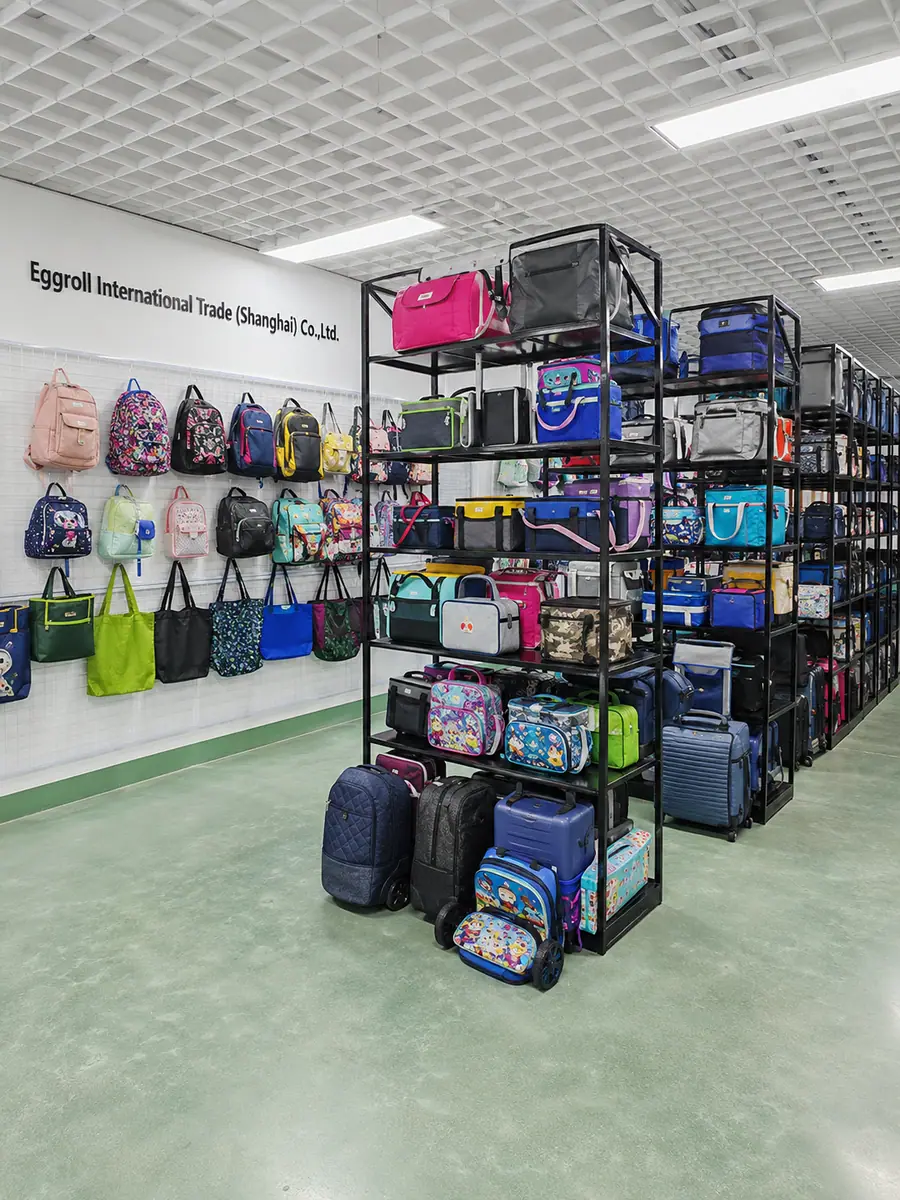
Browse the full catalogue — every model there is already tooled, which is the ODM starting point. If you want something that does not exist, send drawings or a physical sample through the contact form and we will tell you honestly whether it is a pattern change or a new development.
Frequently asked
If I choose ODM, can a competitor buy the same bag?
The silhouette, yes. Your fabric, colourway, hardware finish, print, lining, labelling and packaging are yours. In practice that is what a shopper sees. If genuine shape exclusivity matters — because you are building a recognisable product line rather than a seasonal item — pay for OEM tooling and put an exclusivity clause in the contract with a defined territory and term.
Who owns the pattern in an OEM project?
Whoever paid for it, if the contract says so. Put it in writing before the sample is cut: pattern ownership, the right to move production, and what happens to the physical pattern and dies if you leave. Verbal agreements about pattern ownership are the most common regret in this business.
How much does OEM development cost?
For a soft bag, budget USD 300–1,200 in pattern and sample development, plus USD 800–4,000 if you need custom moulded hardware, plus three to six extra weeks. Screen and die charges are separate and modest.