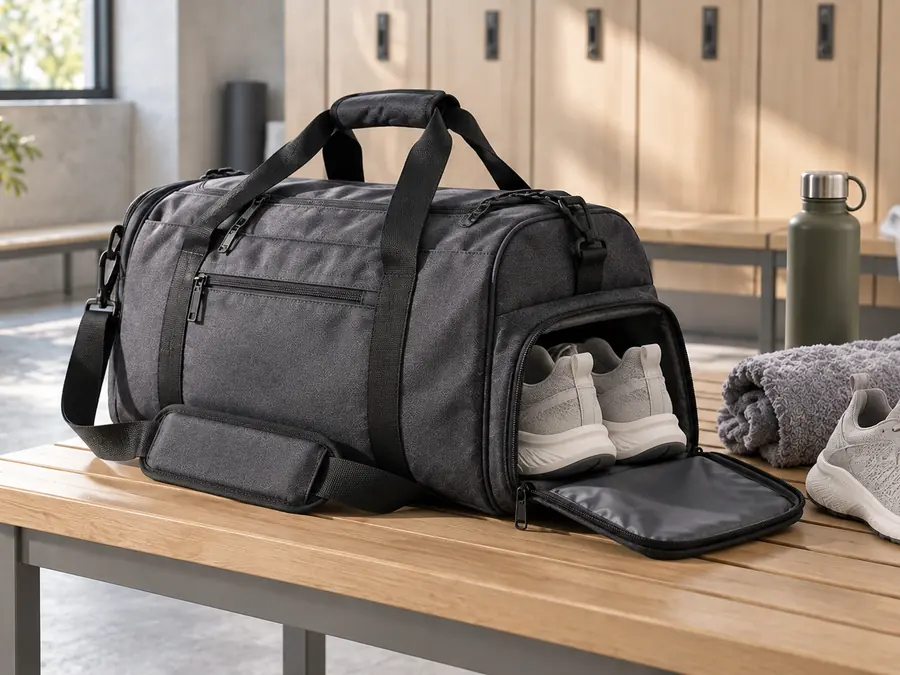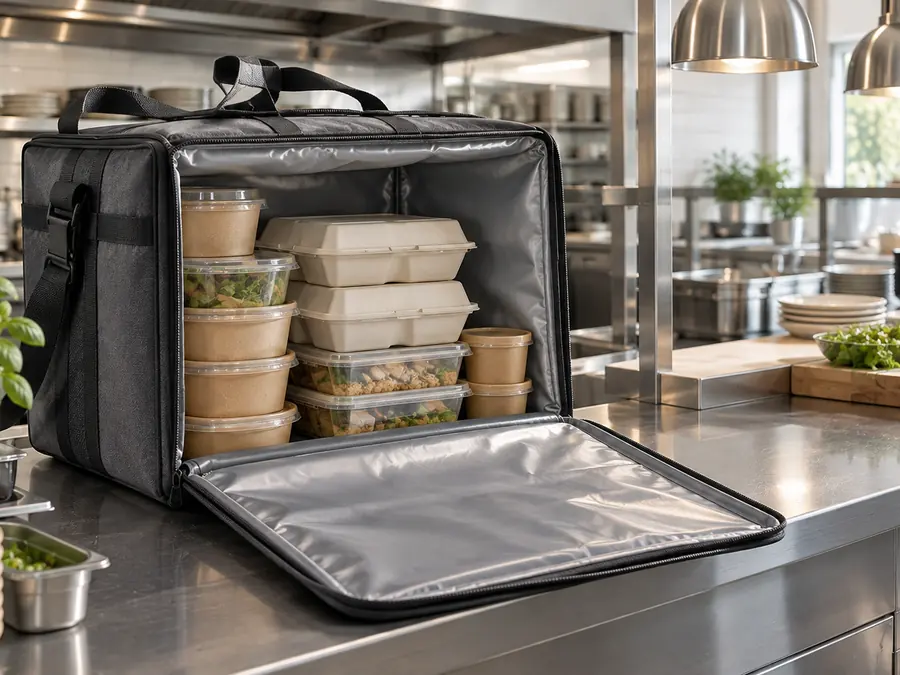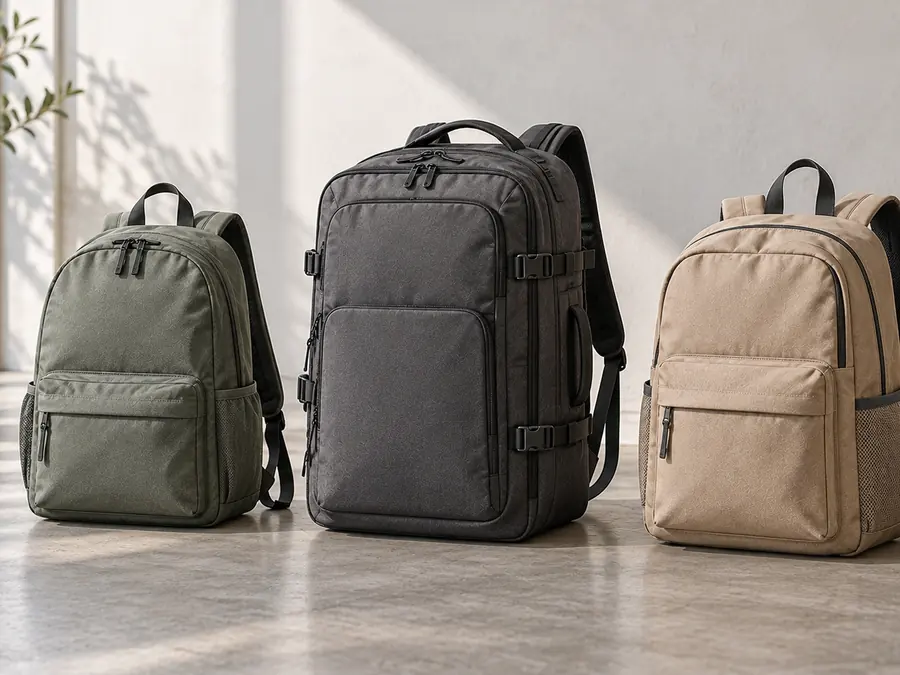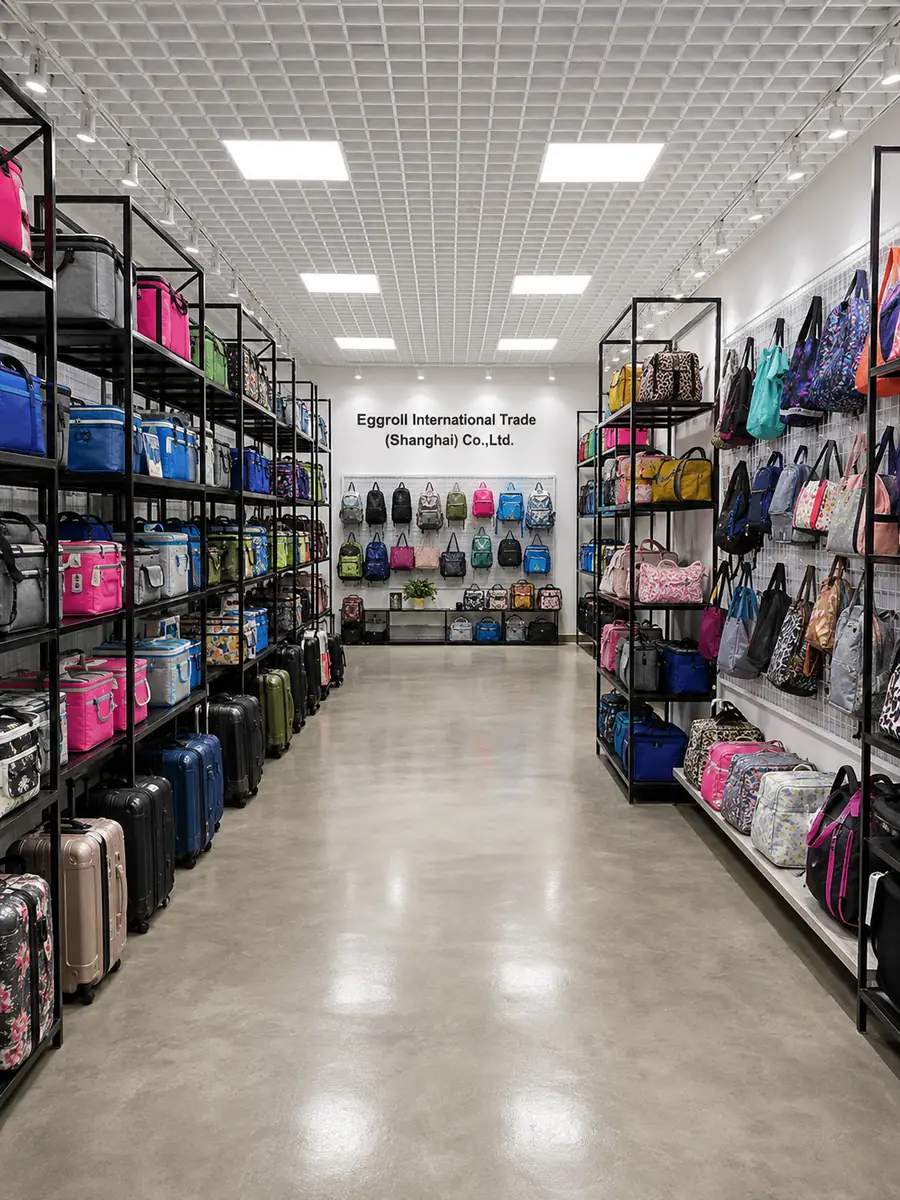
Denier (D) measures yarn thickness, not quality — a 600D fabric at 180 g/m² and one at 230 g/m² are both '600D' and behave differently, so always specify weight in g/m² alongside the denier. For most retail and promotional bags, 600D PU-coated polyester is the workhorse; 1680D is for heavy-duty and premium looks; RPET 600D costs 8–15% more and buys you a recycled-content claim with a GRS transaction certificate; non-woven polypropylene is for giveaway volume only.
Denier is the most quoted and least useful number in the bag industry. This is the short version of what to specify instead.
Reading a fabric specification properly
A complete fabric line looks like this:
600D polyester, plain weave, PU coated, 210 g/m², dyed to Pantone 19-4052 TCX
Four facts, not one. Denier gives you the yarn thickness. Grams per square metre gives you how much material is actually there. The coating tells you how it behaves in rain and how print sits on it. The colour standard removes the argument about "navy".
If a quotation only says "600D polyester", the supplier has left themselves 25% of material weight to play with, and the difference will show up in the bag you receive rather than the one you sampled.
The fabrics we quote most often
600D polyester — the default
The most common outer fabric in soft luggage. Coated with PU, it takes screen print and transfer well, it is available in every colour, and it is repairable in the sense that a factory can substitute a batch mid-run without you noticing — which is exactly why you specify the g/m².
Best for: lunch bags, picnic coolers, shopping totes, school bags, promotional backpacks. Typical weight: 180–230 g/m².
1680D ballistic polyester — heavy duty
Twice the yarn thickness, a distinct ribbed surface, noticeably more abrasion resistance, and a premium look that photographs well. It is stiffer, so it does not drape or fold small.
Best for: men's hiking and travel backpacks, laptop and business bags, tool bags. Cost impact: roughly +12–20% on the fabric line versus 600D.
RPET (recycled polyester)
Chemically the same polymer, spun from post-consumer bottle flake. Available in the same weights as virgin polyester. The important part is not the fabric — it is the GRS (Global Recycled Standard) transaction certificate that follows the order, because that is the document a retailer's compliance team asks for.
Cost impact: +8–15%, plus certificate handling. Note: RPET dyes slightly less consistently in pale shades; on white and pastel programmes ask for an extra lab dip round.
Cotton canvas (10–16 oz)
Natural, takes a heavyweight look, ages well, and is heavy — which shows up in freight. Untreated canvas is not water resistant; a wax or PU back-coat changes that and changes the hand feel.
Best for: premium tote programmes, food and deli branding, wine carriers.
Non-woven polypropylene (60–120 gsm)
The classic giveaway shopper. Cheap, light, printable, and structurally weak at the handle join. Nobody keeps them, which is increasingly the point of criticism at retail level.
Best for: high-volume event and grocery giveaways.
Neoprene
Stretchy, insulating on its own, and the reason bottle sleeves and can holders feel the way they do. It is expensive per square metre but the items are small.
Best for: wine and bottle carriers, cup holders, laptop sleeves.
A comparison you can paste into a brief
| Fabric | Typical weight | Water resistance | Relative fabric cost | Best fit |
|---|---|---|---|---|
| Non-woven PP | 80 gsm | Low | 0.3× | Giveaway shoppers |
| 300D polyester | 150 g/m² | Medium (PU) | 0.8× | Kids' bags, pouches |
| 600D polyester | 210 g/m² | Good (PU) | 1.0× | Coolers, school, promo |
| RPET 600D | 210 g/m² | Good (PU) | 1.1× | Retail with eco claim |
| 1680D polyester | 380 g/m² | Good (PU) | 1.3× | Travel, laptop, heavy duty |
| 12 oz cotton canvas | 400 g/m² | Low unless treated | 1.4× | Premium totes |
| Neoprene 3 mm | — | High | 2.2× | Bottle and cup carriers |
Relative cost is the fabric line only, indexed to 600D. It is not the finished bag price — on a typical cooler, fabric is 20–30% of FOB.
Three specification mistakes that cost money
- Specifying denier without weight. Covered above. It is the single most common gap.
- Choosing fabric before choosing print. Sublimation only works on polyester and only on light grounds. If you have committed to a dark canvas bag and then decide on a full-colour photographic print, you have a problem that costs a sample round to discover.
- Ignoring carton volume. A 1680D bag folds larger than a 600D one. On a 3,000-piece order the freight difference can exceed the fabric saving.
Where to see these in real products
Every model in our catalogue lists its fabric in the specification table — including the denier and, where the mill has issued it, the weight. If you want a like-for-like comparison of two constructions before you brief, add both to an inquiry list and we will quote them side by side.
Frequently asked
Does a higher denier mean a stronger bag?
Not on its own. Denier describes yarn thickness. Strength comes from yarn thickness, weave density, coating and — most of all — how the panels are stitched and bar-tacked. A well-built 600D bag outlasts a badly built 1680D one, which is why we quote stitch density and bar-tack points, not just fabric.
Is RPET worth the premium?
If you sell into EU retail or run corporate gifting where a sustainability story is part of the brief, yes — the premium is 8–15% and the GRS transaction certificate is what buyers actually ask for at audit. If nobody in the chain will ever ask for proof, the material advantage alone does not justify it.
What does the PU or PVC coating do?
It closes the weave, so the fabric resists water and holds a print better. PU is the modern default and is PVC-free. Specify the coating explicitly — an uncoated 600D looks identical on a photo and wets through in the first rain.