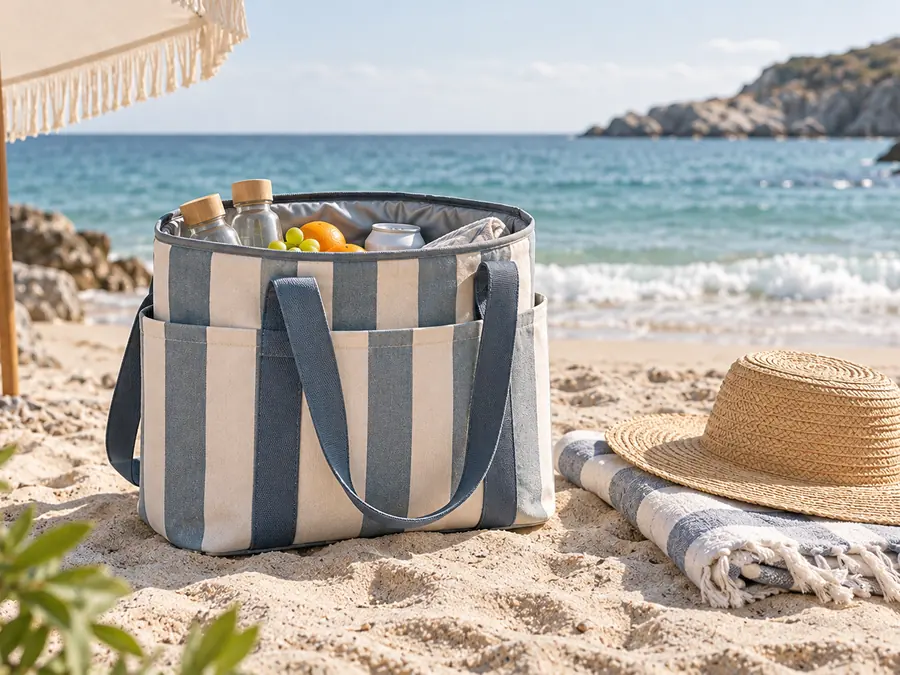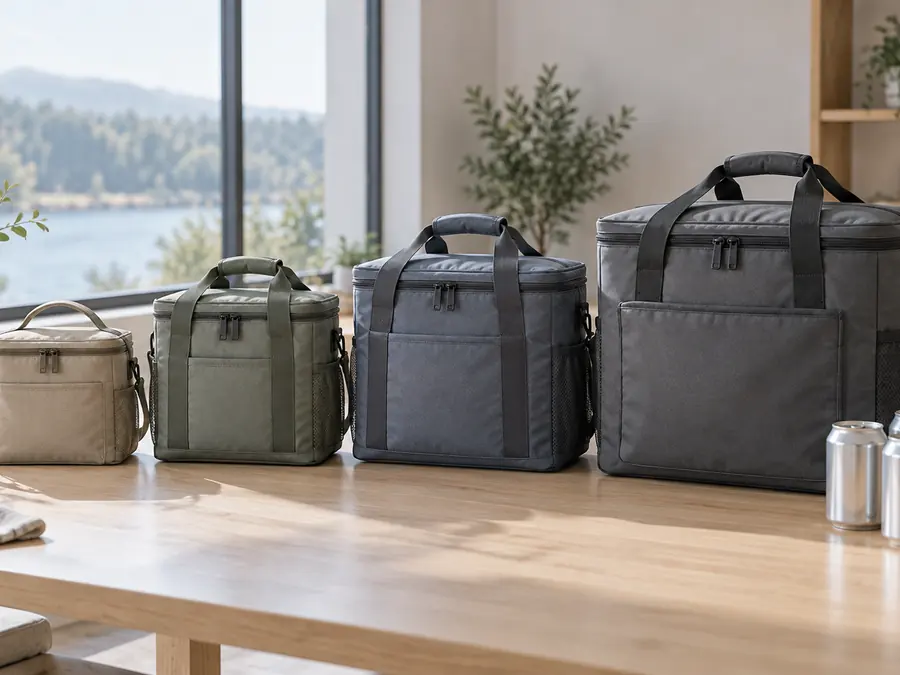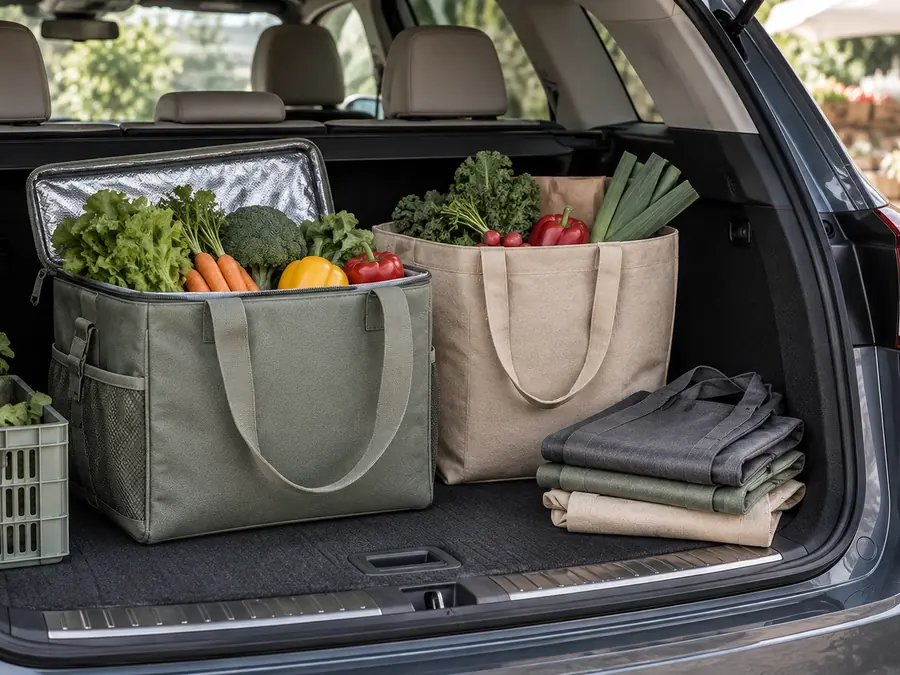
Reusable shopping bags come in four main constructions: non-woven polypropylene for low-cost giveaways, woven or laminated PP for supermarket checkouts, cotton canvas for a natural premium look, and polyester or RPET for printable, packable totes. An insulated grocery bag adds foam and a liner to keep chilled food cold on the way home. Choose by reuse expectation, print method and carton cost.
Reusable grocery bags look like the simplest product in a store: a tote with two handles. Yet the material, the base and the print decide whether a shopper uses one for three years or leaves it in a cupboard after one trip. This guide sets out the constructions behind reusable shopping bags, the sizes that work at a checkout, where an insulated grocery bag earns its higher price, and what actually moves the unit cost.
A note on scope from the Eggroll Bags export desk. Our tooled catalogue is built around insulated bags: cooler totes, foldable cooler baskets and wheeled market trolleys. Plain uninsulated grocery totes are not catalogue models; we quote them from a brief. This guide covers both honestly.
What are reusable grocery bags made of?
Most reusable grocery bags are made from one of five fabrics: non-woven polypropylene, woven polypropylene, cotton canvas, polyester (including recycled RPET), or an insulated sandwich of fabric, foam and liner. Each one suits a different reuse expectation and price point.
| Construction | Look and feel | Washability | Print options | Best for |
|---|---|---|---|---|
| Non-woven PP | Felt-like, light, stiff when new | Wipe only | Screen print, heat transfer | Giveaways, events, low-cost checkout bags |
| Woven PP (often laminated) | Glossy, rigid, holds its shape | Wipe clean | Full-colour printed laminate | Supermarket "bag for life" programmes |
| Cotton canvas | Natural, soft, premium | Washable, may shrink | Screen print, embroidery | Retail merchandise, gift and lifestyle |
| Polyester / RPET | Thin ripstop folds small; 600D is sturdier | Machine washable on gentle cycle (uninsulated) | Screen print, sublimation, heat transfer | Foldable pouch bags, branded totes, recycled-content claims |
| Insulated (600D outer, foam, liner) | Structured, padded | Wipe-clean liner; avoid machine washing foam | Screen print, heat transfer, sublimation, embroidery | Chilled and frozen shopping, premium checkout lines |
Fabric weight matters more than the fabric name. Two "600D" polyesters at different grams per square metre behave differently, so specify weight alongside denier. Our bag fabric guide explains how to write that specification so quotes are comparable.
Reusable shopping bags vs plastic and paper bags
A reusable shopping bag only makes sense if it is used many times; its value is in repeat trips. Plastic shopping bags and paper grocery bags are cheaper per unit, but they are designed for one or a few journeys.
Many cities and countries now charge for, or restrict, single-use carrier bags, which is what pushed reusable bags into the checkout lane. For a retailer, the practical question is not which material is "greenest" in the abstract, but which construction your shoppers will actually bring back. A tote that tears at the handle seam after a few heavy loads does not get reused, whatever it is made of. That is why handle attachment and base construction appear in the checklist below.
If you plan to market a bag on recycled content, the claim needs paperwork. RPET 600D typically costs 8–15% more than virgin 600D, and a GRS transaction certificate is what supports the recycled-content claim on the pack.
What size should a reusable grocery bag be?
Size a reusable grocery tote around what one hand can carry when full, not around how much fits. A bag much larger than a standard paper grocery bag tends to be overloaded and fails at the handles.
Simple arithmetic helps here. A tote of 40 × 33 × 20 cm holds about 26 L. Filled with dense groceries such as bottles and tins, that can weigh 10 kg or more, which is already a firm load for a single pair of handles. Large reusable shopping bags beyond that size work better with shoulder-length handles, a reinforced base board, or wheels.
- Compact foldable bag — packs into its own pouch; for top-up shops.
- Standard grocery tote — roughly paper-grocery-bag capacity with a flat base and side gussets so it stands up while packing.
- Large or family tote — longer handles for shoulder carry and a removable base insert.
- Insulated grocery tote — similar footprint, slightly smaller inside because the foam takes up space on every wall.
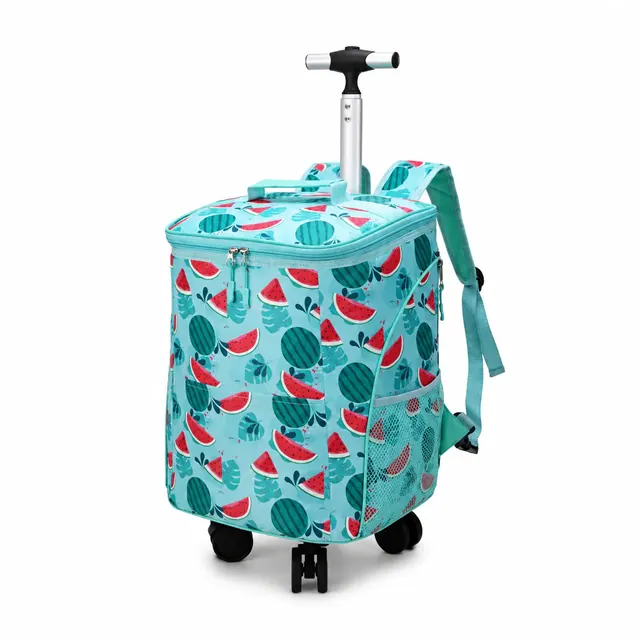
- Grocery bag on wheels — for heavy loads and walking shoppers; see our portable wheeled market trolley bag, which is also insulated.
When is an insulated grocery bag worth it?
An insulated grocery bag is worth it when shoppers carry chilled or frozen food for more than a short walk, or when a retailer wants a higher-value checkout line. It costs more than a plain tote because it adds foam, a liner and more assembly.
Our published design data gives a sense of what insulation can do: a 10 mm EPE foam wall with a welded leak-proof liner and two gel packs holds refrigerated food below 8 °C for roughly 6–8 hours at 25 °C ambient. A grocery journey needs far less than that, so most insulated grocery totes use thinner foam and a foil or PEVA liner to keep the cost in range. Treat any hold time as a design range, not a guarantee.
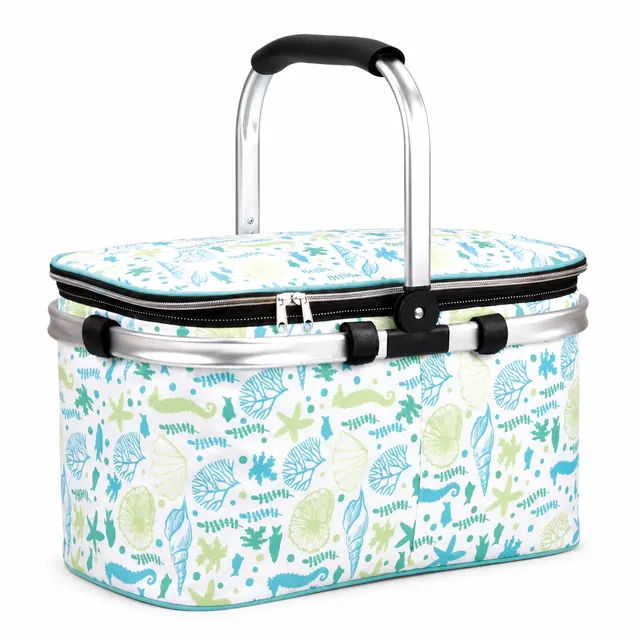
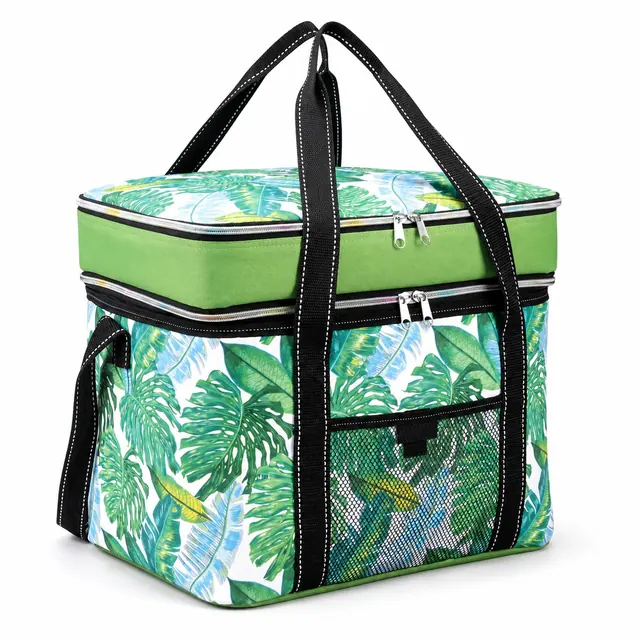
Insulated formats that already exist as tooled models include the folding insulated cooler basket for picnic, camping and shopping (40 × 21 × 24 cm), the double-layer custom logo tote cooler bag (38 × 26 × 31 cm) and the wider cooler basket range. Baskets with a frame stand open at the checkout, which speeds packing.
What drives the cost of custom shopping bags?
The unit cost of custom reusable shopping bags is set by fabric weight, construction, insulation, print and packaging, roughly in that order. Order quantity changes the price, but the specification sets the floor.
- Fabric and weight. Heavier fabric costs more and ships heavier. Recycled fabric adds the 8–15% noted above.
- Construction. Gussets, a base board, bound seams and reinforced handle joins all add labour and material.
- Insulation. Foam, liner and welding are the largest single step up in cost.
- Decoration. Screen print is priced per colour and per position; sublimation suits full-colour artwork; embroidery and woven labels sit at the premium end.
- Packaging and folding. Folded into a pouch, flat-packed, or hung with a header card; each changes labour and carton count.
For personalized shopping bags with a store logo, ask for the print size and number of colours to be fixed early. Changing a two-colour print to four colours after sampling changes screens, price and lead time.
Checklist: briefing a custom reusable grocery bag
A complete brief gets a comparable quote in one round. Include these points:
- Use: checkout giveaway, sold "bag for life", chilled and frozen, or premium merchandise
- Finished dimensions, gusset depth and handle drop
- Fabric, weight in g/m², colour reference (Pantone TCX/TPG for fabric)
- Recycled-content claim required? If so, GRS documentation
- Insulation thickness and liner type, if any
- Print method, number of colours, positions and artwork files (Pantone C for print)
- Target load and any handle strength test you want added
- Packaging, barcode, carton and pallet requirements
- Quantity per colour and delivery window
- Destination market for the compliance reports (REACH, Prop 65, food-contact migration on liners)
How ordering reusable shopping bags in bulk works
For catalogue models the minimum is 500 pcs per colour; a new pattern or custom-dyed colour starts at 1,000 pcs per colour. A counter sample takes 7–12 days and the fee is credited against bulk. Bulk production runs 25–35 days after sample approval, with about a week extra from July to October, and sea freight to North Europe or the US East Coast takes 28–40 days.
Every order gets inline checks at 20% and 80% of production and a pre-shipment inspection to ISO 2859-1 General Level II, AQL 2.5 major / 4.0 minor, including the 5 kg, 60-second handle pull test. If you are launching a grocery checkout programme, our own-brand lunch bag project for grocery retail shows how packaging and shelf readiness were handled. When you have a brief, request a quote and we will reply in writing within one working day.
Frequently asked
What are the best reusable grocery bags?
The best reusable grocery bags are the ones shoppers keep using: a flat, reinforced base, handles stitched or bar-tacked through more than one layer, and a size that is comfortable to carry when full. Woven PP and 600D polyester are durable everyday choices; canvas suits premium retail; insulated totes suit chilled and frozen shopping.
Can you put reusable grocery bags in the washing machine?
Uninsulated polyester and cotton bags can usually be washed on a gentle cycle, though cotton may shrink. Non-woven and laminated woven PP are better wiped clean. Insulated grocery bags should not be machine washed, because the foam can crease and the liner seams can stress; wipe the liner with warm soapy water and dry it open.
What is the minimum order for custom reusable shopping bags?
For our catalogue models the minimum is 500 pieces per colour, and 1,000 pieces per colour for a new pattern or custom-dyed colour. Plain uninsulated totes are quoted from a brief rather than from the catalogue. A counter sample takes 7–12 days and the fee is credited against the bulk order.
Are insulated grocery bags worth the extra cost?
They are worth it when food needs to stay chilled for longer than a short walk, or when the bag is sold as a premium checkout item. They cost more than plain totes because of the foam, liner and extra assembly. For a quick trip, a well-made plain tote with an insulated pouch inside may be enough.
How do I back up a recycled-content claim on a shopping bag?
Use a recycled fabric such as RPET and obtain a GRS transaction certificate for the shipment; that document is what supports the claim. RPET 600D typically costs 8–15% more than virgin 600D. Agree the wording of the claim with your own compliance team for each market before printing packaging.