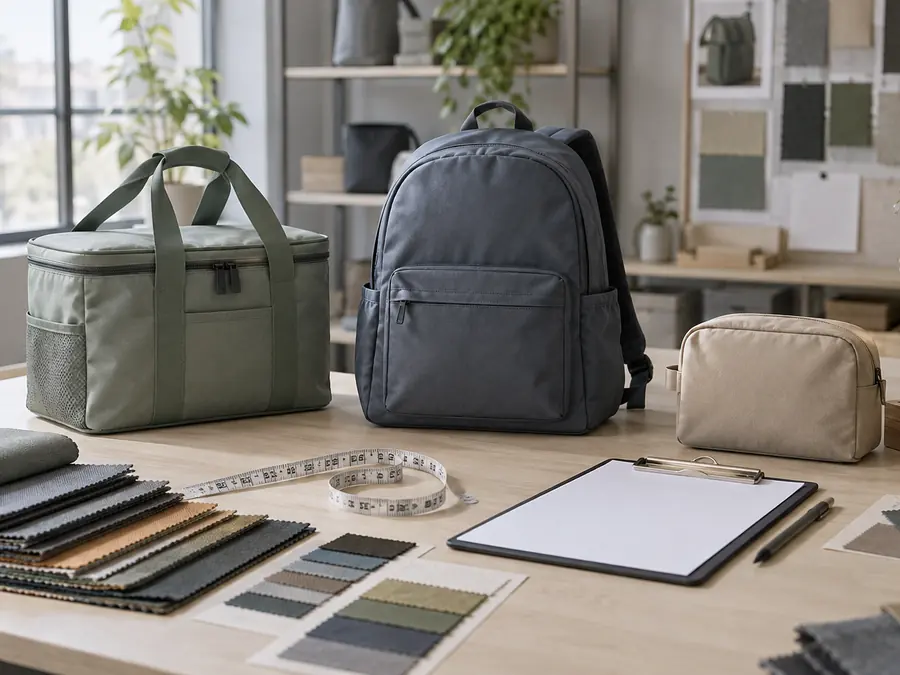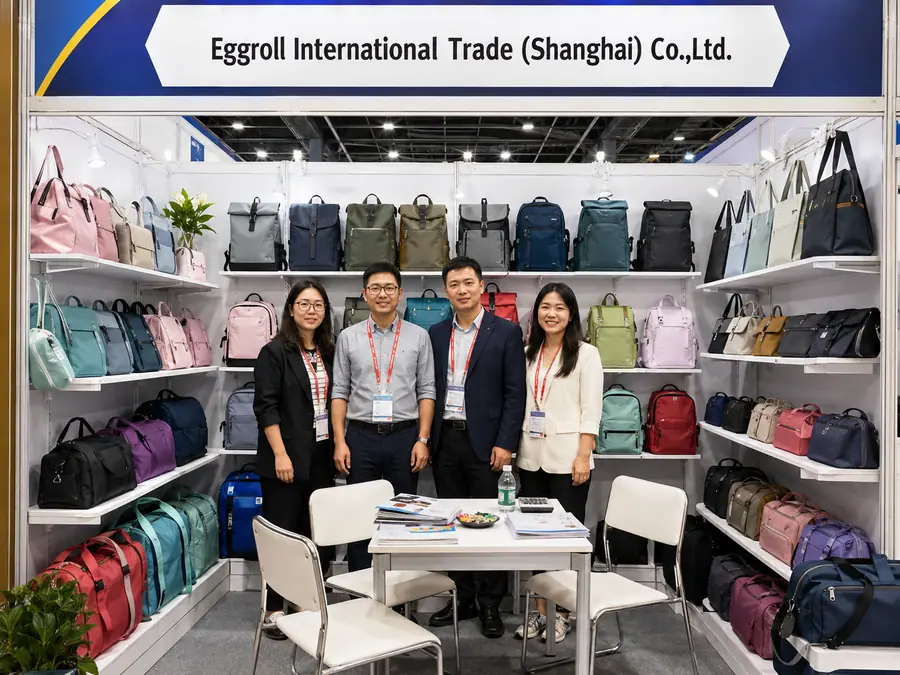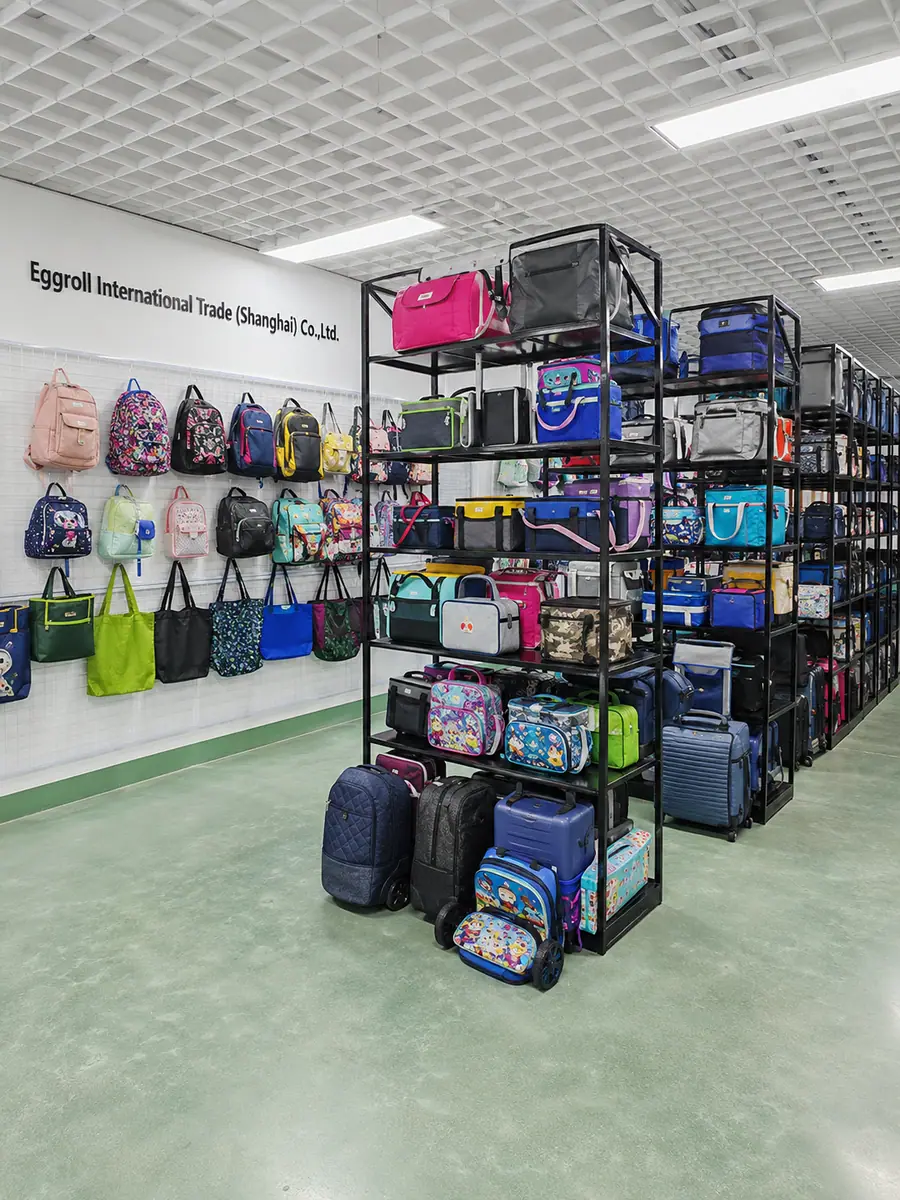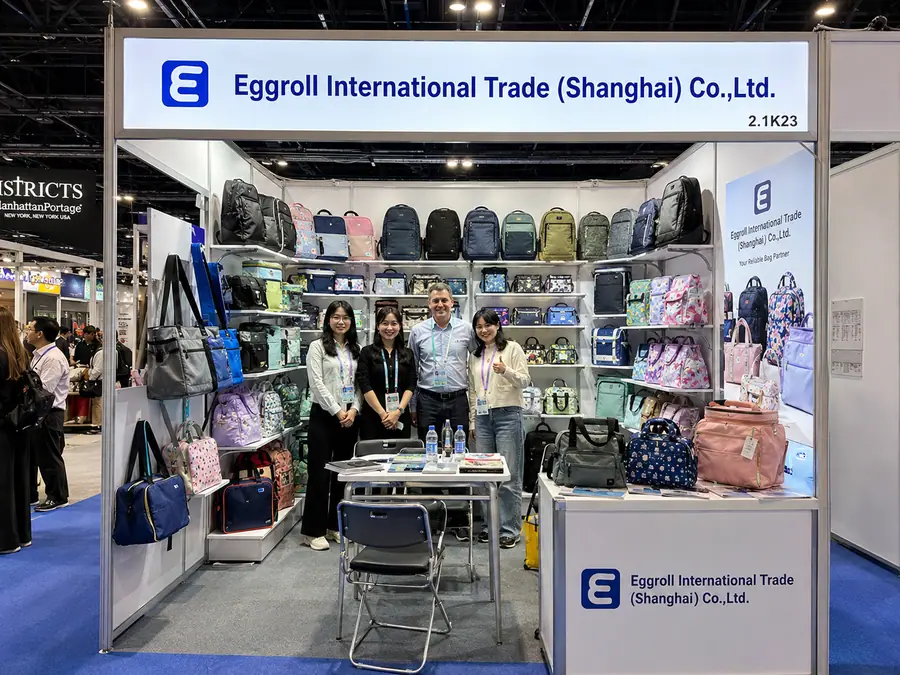
For soft luggage, the working standard is a pre-shipment inspection to ISO 2859-1 General Inspection Level II at AQL 2.5 for major defects and 4.0 for minor, with zero tolerance for critical defects. That alone is not enough: the inspection brief must also name the sealed sample, list the on-site tests (measurement, zip cycling, liner leak, print rub, seam pull, carton drop) and state who pays for rework and re-inspection when the lot fails.
Most import disputes over bags come down to a document that did not exist: a written inspection standard agreed before production. This is a template for that document.
1. Name the standard
Pre-shipment inspection per ISO 2859-1, General Inspection Level II. Critical 0 / Major AQL 2.5 / Minor AQL 4.0. Inspection performed at 100% production complete and at least 80% packed.
That last clause matters. Inspectors sent too early cannot draw a representative sample and cannot check cartons.
2. Classify defects before, not after
Argue about classification in advance, in a table attached to the PO. A workable starting point for soft luggage:
| Defect | Class |
|---|---|
| Exposed sharp metal, broken rivet | Critical |
| Strap or handle detaching under pull test | Critical |
| Missing or wrong safety/care label, wrong barcode | Critical |
| Zip does not run, splits or locks | Major |
| Liner leaks in the 10-minute water test | Major |
| Measurement out of tolerance by more than 5% | Major |
| Open seam, skipped stitching over 3 cm | Major |
| Print misplaced by more than 5 mm, or wrong Pantone | Major |
| Colour shading between panels, visible at 1 m | Major |
| Loose thread ends, minor glue mark | Minor |
| Slight print edge roughness | Minor |
| Carton print smudge | Minor |
3. Specify the on-site tests
An inspector who only looks at bags will only find cosmetic faults. Write the tests into the brief:
- Measurement — length, width, height, strap length and handle drop on 5 pieces against the sealed sample, 5% tolerance.
- Weight — 5 pieces against the approved sample weight, 5% tolerance. Catches fabric substitution faster than anything else.
- Zip cycle — 50 open/close cycles on 5 pieces; no splitting, no slider separation.
- Liner leak test — fill the insulated compartment with 1 litre of water, stand for 10 minutes, check the outer for wicking. Applies to all welded-liner constructions.
- Seam and handle pull — 5 kg static load on each handle for 60 seconds, plus a hand pull on the strap anchors.
- Print rub — 10 dry and 10 wet rubs with a white cloth; no transfer.
- Foam thickness — cut one sacrificial unit from the lot and measure the wall. Non-negotiable if you are paying for 15 mm.
- Carton drop — one full carton, 1 metre, one corner, three edges, one face; contents undamaged.
- Barcode scan — every carton label and 5 retail units, scanned live.
- Packing check — quantity per carton, carton dimensions, gross and net weight, shipping marks against the PO.
4. Decide the consequences in advance
The most important clause in the whole standard:
If the lot fails, the supplier reworks or replaces at its own cost and pays for a full re-inspection. The balance payment falls due only on a passed report. Shipment is held pending release by the buyer in writing.
Without that, a failed inspection becomes a negotiation you conduct under time pressure with a booked container.
5. Do not skip the inline checks
A pre-shipment inspection tells you what happened. Inline checks change what happens. Ask for:
- First-article approval — the first 5 pieces off the line photographed and compared to the sealed sample before the run continues.
- 20% inline — the point at which a fabric or print problem is still cheap to fix.
- 80% inline — catches drift, and confirms packing is starting correctly.
We do these as standard and send the photographs. They are the reason most of our shipments pass the third-party inspection first time — the problems were found when there were 600 pieces made, not 3,000.
6. Compliance documents are part of QC
For most European and North American buyers the paperwork pack should include:
- REACH SVHC screening on the liner and outer fabric
- Phthalate testing where any PVC or printed plasticised surface is used
- California Proposition 65 statement, if selling into California
- EN 71-3 migration testing for children's school bags and lunch bags
- Food-contact migration testing for liners in contact with unwrapped food
- A GRS transaction certificate for recycled-content claims
Ask for reports issued in your buying entity's name. A report addressed to the factory is often refused by a retailer's onboarding portal.
A one-page brief you can send to any inspector
Product: [model, PO number] Quantity: [pcs], packed in [n] cartons Standard: ISO 2859-1 GL II, Critical 0 / Major 2.5 / Minor 4.0 Reference: sealed counter sample signed [date], both parties Tests: measurement, weight, zip cycle ×50, liner leak 10 min, handle pull 5 kg, print rub, foam thickness (1 destructive), carton drop, barcode scan, packing verification Report: photographs of every defect class found; carton and shipping-mark photographs; pass/fail against the above On failure: rework at supplier cost, full re-inspection at supplier cost, balance payment deferred
Hand that to SGS, BV, TÜV, Intertek or your own agent and you will get a report you can act on.
Questions about how we run inspections, or want our QC brief for a specific model? Get in touch — we will send you the actual checklist we use on your product family.
Frequently asked
What does AQL 2.5 actually mean?
It is the maximum percentage of defective units that will still be accepted, applied to a sample size drawn from the lot by table. For 3,000 pieces at General Level II, the inspector draws 125 pieces; at AQL 2.5 the lot passes with up to 7 major defects and fails at 8. It is a statistical acceptance rule, not a promise that no defective bag exists.
Should I use my supplier's inspection or a third party?
Both. The supplier's inline checks at 20% and 80% of the run catch problems while they are still fixable. A third-party pre-shipment inspection at 100% packed gives you an independent report to hold payment against. They serve different purposes and the second is cheap insurance — USD 250–400 per man-day.
What is a critical defect on a bag?
Anything that makes the product unsafe or unsaleable: a sharp exposed metal edge, a broken or detaching strap anchor, mould, a choking hazard on a children's item, a missing legally required label, or a wrong barcode. Critical defects are zero-tolerance — one is enough to fail the lot.