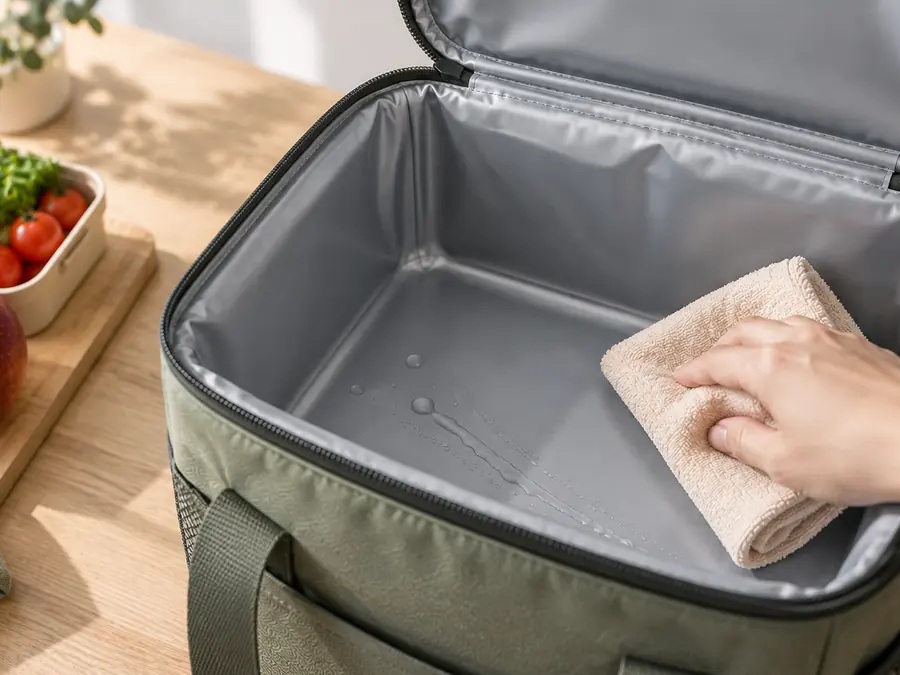
A leak-proof lunch bag needs a liner sealed by high-frequency welding rather than stitching, in a film such as PEVA or TPU; that sealed liner holds spills and wipes clean. Fully machine-washable insulated lunch bags are rare because the foam creases in a washer. For a "non-toxic" claim, ask for REACH, food-contact migration and, for children's lines, CPSIA or EN 71-3 test reports per model.
Parents and office workers search for a leak proof lunch bag, a washable lunch bag or a non toxic lunch bag because the last one they bought failed in one of those three ways. For a product developer, all three problems trace back to the same component: the liner. This guide explains the liner materials used in insulated lunch bags, how each one handles spills and cleaning, and which tests turn marketing words into claims you can defend.
What makes a lunch bag leak proof?
A lunch bag is leak proof when its liner is a sealed bladder: film panels joined by high-frequency welding, with no needle holes, and attached to the outer shell above the likely spill line. Stitched liners, however good the fabric, leak through the stitch holes.
Three details separate a genuinely leak-proof lunch bag from one that is merely water-resistant:
- Welded seams on the liner, especially the base corners where liquid collects.
- A weldable film. PEVA and TPU weld reliably; foil laminate generally does not.
- Binding placed high. The seam where liner meets outer fabric should sit near the zip, not halfway down the wall.
We check this on site with a liner leak test: 1 L of water left in the bag for 10 minutes, then the outside and the foam are inspected. It is a simple test, and it catches most construction faults before the bag ships.
Lunch bag liner materials compared
PEVA is the default liner for retail lunch bags, TPU is the durable upgrade, foil laminate is the low-cost option, and a hard plastic liner adds structure and an easy-clean insert. The table sets out the trade-offs.
| Liner | Leak resistance | Cleaning | Durability | Typical use |
|---|---|---|---|---|
| PEVA film, welded | Good when welded | Wipe clean | Adequate; stiffens below about −5 °C | Retail lunch bags, picnic coolers |
| TPU film, welded | Very good | Wipe clean, resists staining | Tough, puncture-resistant, flexible when cold | Premium lunch bags, food delivery |
| Aluminium-foil laminate | Poor; cannot form a reliable welded bladder | Wipe gently; creases whiten | Splits at folds over time | Promotional and entry price |
| PVC-coated fabric | Good if seams are sealed | Wipe clean | Durable | Value coolers; check phthalate testing |
| PU-coated polyester | Not leak proof | Wipe clean | Good | Fashion-led lunch bags |
| Removable hard plastic liner | Very good as a tray | Lift out and wash separately | Rigid; adds weight and carton volume | Premium and "hard liner" coolers |
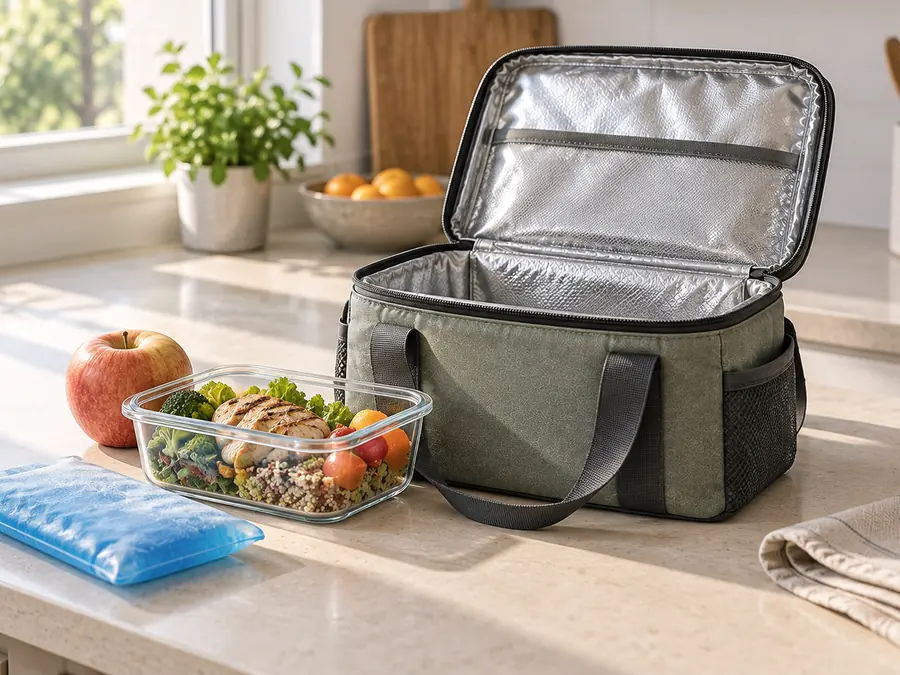
The insulation behind the liner matters as much as the liner itself. Closed-cell EPE foam does not absorb water, so a small leak does not ruin the bag; open-cell foam does. Our cooler bag insulation guide covers foam thickness and closure design in detail.
Are washable lunch bags really machine washable?
Most insulated lunch bags are not truly machine washable. The foam creases or breaks in a washing machine and the liner seams take stress they were not designed for. A wipe-clean welded liner is the practical answer for everyday hygiene.
There are three honest ways to deliver a "washable" product:
- Wipe-clean welded liner. Warm soapy water, a cloth, dry with the bag open. This suits the large majority of insulated lunch bags.
- Removable liner or insert. A liner or hard tray that lifts out can be washed on its own while the insulated shell is wiped. This adds cost and a closure to design.
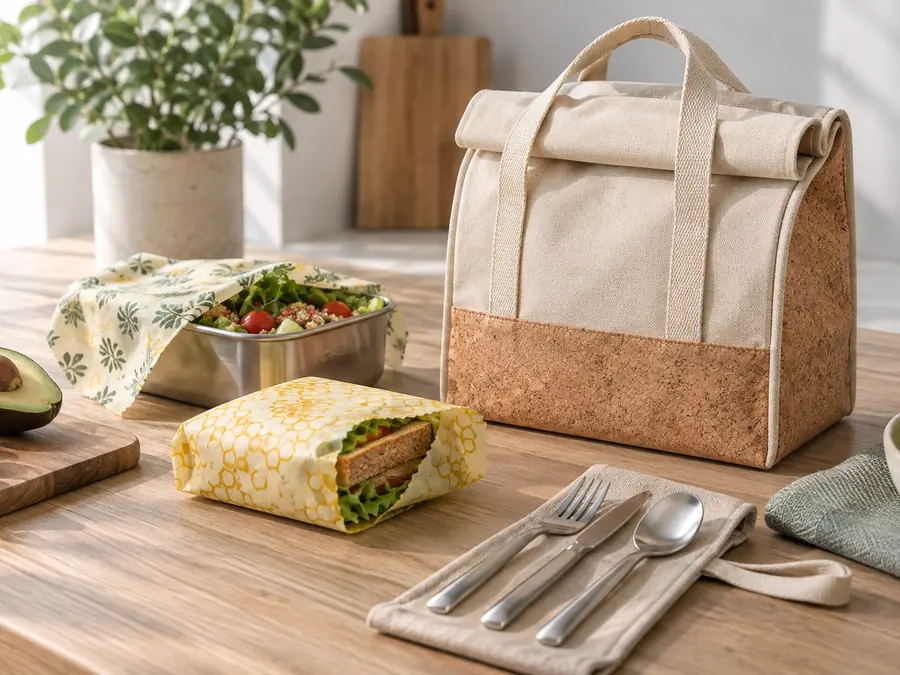
- Uninsulated washable lunch sack. A fabric sack with no foam can be machine washed on a gentle cycle, but it is a carrier rather than a cooler.
If your packaging says "machine washable lunch bag", wash the approved sample several times on the stated cycle before approving bulk, and print the care instructions that test supports. The importer carries the liability for the claim.
Lunch bags and coolers with a hard liner
A lunch bag with a hard liner uses a moulded plastic tray or box inside the soft shell. It holds shape, protects food, and lifts out for washing, but adds weight, cost and tooling.
A cooler with a removable hard liner is attractive when shoppers want to wash the inside thoroughly, or when containers need a rigid base. The trade-offs are real: the moulded insert needs its own tool, the bag no longer folds flat, and fewer units fit in a carton. For a lunch cooler with a hard liner, also confirm the food-contact status and washing instructions of the insert itself, since it is a separate material from the fabric.
Hard-liner lunch coolers are not tooled models in our catalogue. If your range needs one, send us a brief with the insert dimensions and material, and we will tell you what is practical and what it changes in cost and carton count.
What makes a non toxic lunch bag?
"Non toxic" is not a test result. What you can document is that the materials touching food were tested for the substances regulated in your market. That evidence comes from laboratory reports on the specific model, not from a material name.
The reports we arrange per model and market, issued in the buyer's name, typically include:
- EU REACH SVHC screening on fabric, liner and trims.
- Food-contact migration on the liner where it touches unwrapped food.
- Phthalates where PVC or plasticised prints are used.
- California Prop 65 for products sold in California.
- CPSIA for US children's products and EN 71-3 for children's products in Europe.
Shoppers also ask for a BPA free lunch bag. BPA is mainly associated with polycarbonate plastics and epoxy coatings rather than the PEVA or polyester used in soft lunch bags, but the defensible route is still a test report rather than an assumption. The same applies to BPA free snack containers sold alongside the bag; they are a separate product with their own testing. For children's lines, describe which tests apply and that the model passed them, not that the bag "is safe".
Waterproof lunch bag or leak proof lunch bag?
A waterproof lunch bag keeps rain out; a leak proof lunch bag keeps spills in. The first depends on the outer fabric and zip, the second on the liner.
Coated 600D polyester, PVC-backed fabric and neoprene shed rain well. A coil zip with a storm flap stops water running in at the top. None of that makes the liner leak proof, so specify both properties separately, and test both.
How to specify a leak proof, easy-clean lunch bag
Follow these steps when you brief a supplier, so the sample can be checked against something measurable:
- Choose the liner film (PEVA or TPU for leak-proof) and state "high-frequency welded".
- Specify foam type and thickness, typically 8–10 mm closed-cell EPE for a lunch bag.
- State the binding height of the liner seam and the zip type, with a storm flap if needed.
- Define care instructions: wipe clean, or the exact wash cycle you will test.
- List the test reports required for each destination market.
- Approve a counter sample (7–12 days; the fee is credited against bulk) after a leak test and, if needed, a timed temperature test.
- Confirm pre-shipment inspection to AQL 2.5 major / 4.0 minor, including the liner leak test and a 50-cycle zip test.
Leak-resistant lunch bags you can start from
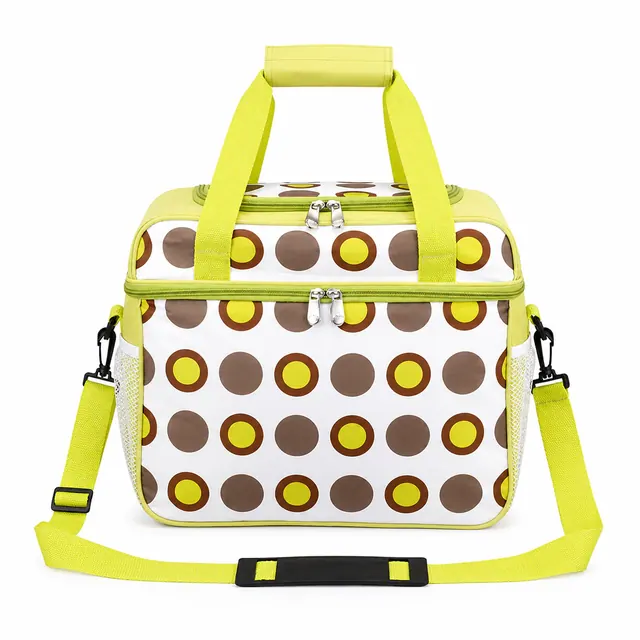
Starting from a tooled model saves pattern development time. Useful starting points in our insulated lunch bag range include the insulated lunch bag with shoulder strap (600D polyester with PEVA, 35 × 20 × 29 cm), the mini picnic lunch cooler bag (600D polyester with PEVA, 23 × 13 × 23 cm) and the custom waterproof lunch bag for kids, where children's-product testing is arranged per market. Liner film and welding can be specified on any of them.
Catalogue models start at 500 pcs per colour, and small trial runs of 100–300 pcs are sometimes possible on lunch bags at a higher unit price, which is useful for testing a new liner spec with real customers.
Frequently asked
How do I know if a lunch bag is truly leak proof?
Check that the liner is a welded bladder with no stitch holes, made from a weldable film such as PEVA or TPU, and that the seam joining it to the outer is near the top. Then test it: pour in 1 L of water, wait 10 minutes and check the outside and the foam for moisture.
Can I put an insulated lunch bag in the washing machine?
Usually not. Machine washing creases the foam and stresses the liner seams, which shortens the bag's life. Wipe the liner with warm soapy water and dry it with the bag open. Only follow a machine-wash instruction if the maker has tested that model on that cycle.
Is a lunch bag with a hard liner better?
A hard liner gives structure, protects food and lifts out for thorough washing, so it suits premium ranges. It also adds weight, cost and tooling, stops the bag folding flat and reduces carton count. A welded soft liner is lighter and cheaper and is wipe-clean, which is enough for most daily lunches.
What tests support a non toxic lunch bag claim?
Typical reports are REACH SVHC screening, food-contact migration on the liner, phthalate testing where PVC is used, Prop 65 for California, and CPSIA or EN 71-3 for children's products. Reports should be issued per model and market. Describe what was tested and passed rather than claiming the bag is safe.
What is the difference between waterproof and leak proof?
Waterproof refers to the outside: coated fabric and a covered zip keep rain out. Leak proof refers to the inside: a welded liner keeps spills from reaching the foam and the outer fabric. A bag can be one without the other, so specify and test both properties.