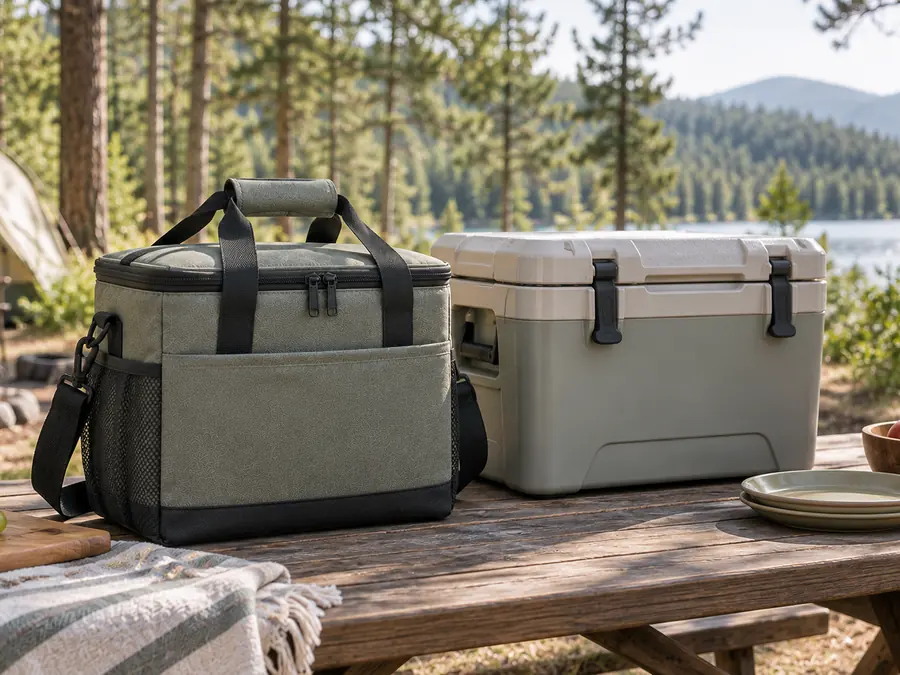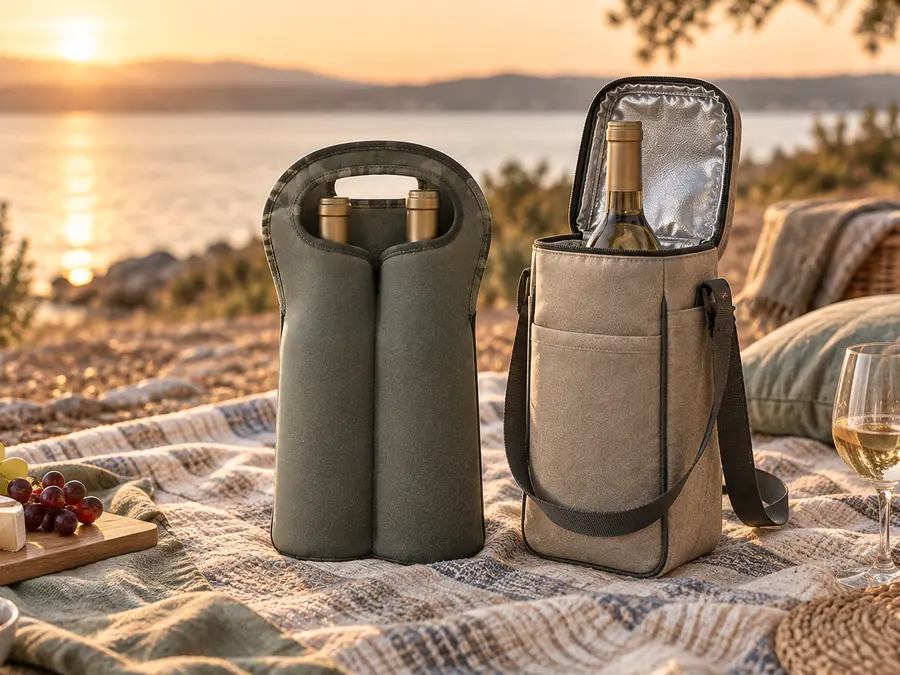
A neoprene wine tote is a stretchy, light sleeve that protects a bottle and slows warming for a short trip; a foam-insulated bottle cooler with a foil or PEVA lining holds temperature longer and suits picnics and gifting. Size the bag to the widest bottle you expect, usually about 7.5–8 cm for still wine and 9 cm for sparkling, and test the handles with full bottles.
A wine tote, a bottle bag and a bottle cooler can look almost identical on a product page, yet they behave very differently once a cold bottle goes inside. Some are protective sleeves, some are proper insulated carriers, and a few are built for baby feeding bottles rather than wine. This guide from the Eggroll Bags export desk explains the two main constructions, neoprene and foam-insulated fabric, and shows buyers how to size, specify and brand a wine carrier range that does what the packaging says.
Neoprene wine tote or insulated bottle cooler: which is better?
Neoprene is better for a light, stretchy, giftable wine tote that cushions a bottle on a short journey. A foam-insulated bottle cooler is better when the bottle has to stay cold for an afternoon.
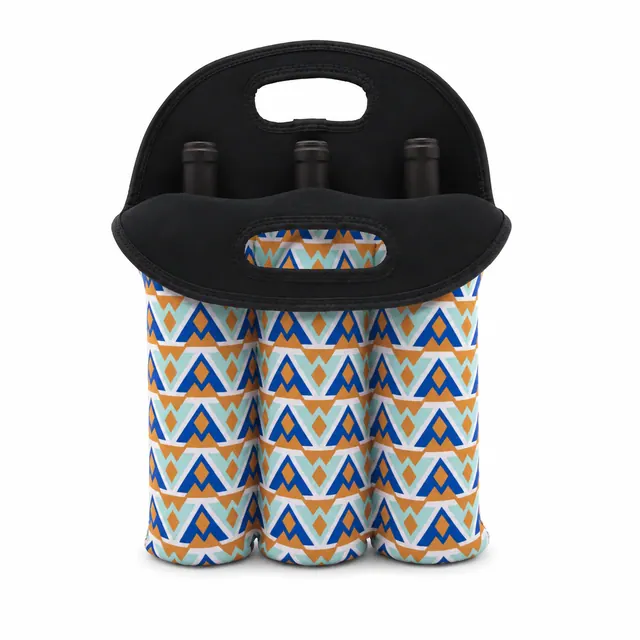
Neoprene is a closed-cell synthetic rubber foam, usually 3–5 mm thick in bags like these. It stretches to grip the bottle, absorbs knocks and prints well, but a thin wall only slows warming; it does not hold a chilled bottle for hours. A foam-insulated cooler uses a woven outer such as 600D polyester, a layer of EPE or PE foam, and a foil, PEVA or similar lining. The thicker wall and closed top hold temperature much longer, and adding a gel pack or a pre-chilled sleeve extends that further.
| Construction | Cold holding | Protection | Packs flat | Best use |
|---|---|---|---|---|
| Neoprene sleeve or tote | Short: slows warming on the way to dinner | Good cushioning, stretch fit | Yes, very compact | Gifting, BYO dinners, retail add-ons |
| Foam-insulated fabric bottle bag | Longer: picnic or afternoon use | Good, with a structured base | Mostly; foam keeps some shape | Picnics, travel, wine club gifts |
| Foil-faced or aluminium-look bottle cooler | Moderate; reflects radiant heat | Light | Yes | Promotions, events, single bottles |
| Teslin or coated-fabric sleeve | Short | Light, wipe-clean | Yes | Water bottles, branded sleeves |
The physics behind this is covered in our cooler bag insulation guide: foam thickness, a sealed lining and a closed top matter far more than the outer fabric. For context, our published design data for a lunch-sized bag with a 10 mm EPE foam wall, a welded liner and two gel packs is roughly 6–8 hours below 8 °C at 25 °C ambient. A single-bottle bag has much less internal mass than a packed lunch bag, so treat that as a reference point for the construction, not a promise for a wine bottle.
What size should a wine bottle bag be?
Size the bag to the widest and tallest bottle you expect customers to carry, then add a little ease. A standard 750 ml still wine bottle is roughly 7.5–8 cm across and about 30 cm tall; sparkling wine and some Burgundy-shape bottles are closer to 9 cm across.
- Internal diameter: 10–12 cm on a foam-insulated bag allows for the wall thickness and a slim ice sleeve. Neoprene can be tighter because it stretches.
- Internal height: about 31–33 cm clears most still wine bottles including the neck; check against taller Alsace-style or flute bottles if your range includes them.
- Weight: a full 750 ml bottle typically weighs about 1.2–1.6 kg, so a two bottle wine carrier is lifting roughly 2.5–3.2 kg on its handles.
- Divider: a 2 bottle wine carrier needs a padded divider so the bottles do not knock together.
Our catalogue models line up with those numbers. The wine bottle cooler bag in microfiber and 600D polyester measures 10×10×31 cm; the insulated bottle cooler bag in 600D polyester measures 12×12×31 cm, which leaves room for a wider sparkling bottle. For two bottles, the neoprene double wine cooler bag (32×43 cm) is a two-bottle wine tote with carry handles.
Wine carriers for travel, picnics and gifting
Match the carrier to the journey. A single-bottle sleeve suits a dinner invitation; a padded, insulated two bottle wine carrier suits a picnic; wine travel bags for luggage need protection and leak containment first.
Gift and retail. Wine shops and wine clubs often sell a branded wine tote at the till or include one with a two-bottle gift. Neoprene and printed polyester give the most decoration options, and sublimation can cover the whole surface in a pattern or seasonal design.
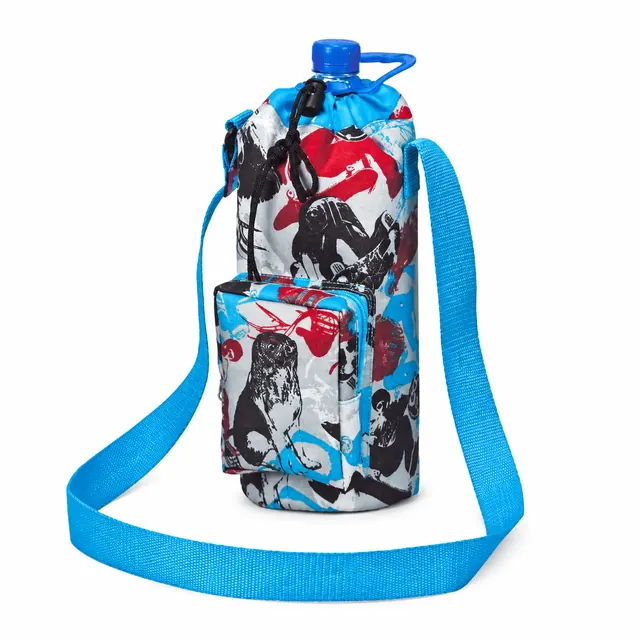
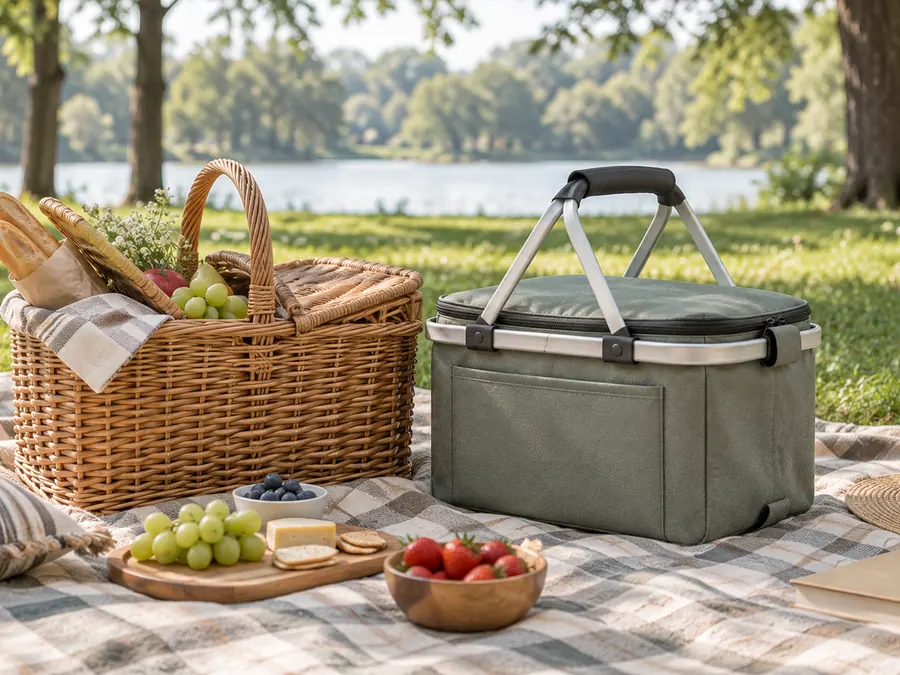
Picnic and outdoor. An insulated wine bag with a flat base, a zip or drawstring top and a shoulder or grab handle is the practical choice. Some buyers pair a bottle cooler with a picnic bag, or specify a lunch bag with a water bottle holder so a single product covers both.
Travel. Wine travel bags need cushioning and a liner that contains a leak if a bottle breaks. A wipe-clean Teslin wine cooler bag for travelling (11.5×11.5×33 cm) is light and easy to clean. Avoid promising that any soft bag will protect a bottle from a heavy impact in checked luggage.
Leather and premium looks. Searches for a leather wine bag or leather wine tote are common. Our catalogue offers PU leather and sequin finishes on insulated bags rather than genuine leather; if your range needs real leather, send us the brief and we will tell you what is realistic.
Baby bottle cooler bags and feeding bottle bags
A baby bottle cooler bag uses the same construction as an insulated bottle bag, sized for shorter, wider feeding bottles and usually built into a larger parent bag rather than sold on its own.
Feeding bottles vary more in width than wine bottles, especially wide-neck designs, so measure the widest bottle in the range you are designing around. Common features are an insulated pocket for two bottles, a wipe-clean lining and a loop to clip the bag to a pram. The multi-function insulated baby tote (600D polyester with a foil lining, 35×13×29 cm) is one example of an insulated feeding bottle bag built into an everyday parent bag.
For anything that holds milk or formula, we describe the bag's construction and test reports, not how long milk stays safe. Parents should follow local health guidance on storing and transporting feeds. Liners intended to contact food can be covered by a food-contact migration test, and products for children can be tested to EN 71-3, for phthalates and to CPSIA for the US, with reports issued per model and market in the buyer's name.
How to specify a custom wine bag range
A good specification fixes the bottle sizes, the construction and the decoration before sampling, so the counter sample is a confirmation rather than a first draft.
- List the bottle shapes you want to fit and measure the widest and tallest.
- Choose the construction: neoprene for stretch and gifting, foam-insulated fabric for cold holding.
- Decide on single bottle, two bottle or mixed, and whether a divider is needed.
- Choose the closure and carry: drawstring, zip, handles or a shoulder strap.
- Set the decoration: screen print, heat transfer, full-surface sublimation, embroidery or a woven label.
- Confirm colours against Pantone TCX or TPG references for fabric and Pantone C for print.
- Agree the tests: handle pull, zip cycle, print rub, plus any REACH or Prop 65 reports for your market.
- Approve a counter sample with real bottles inside before bulk is booked.
Our pre-shipment inspection includes a handle pull test (5 kg for 60 seconds), which comfortably covers two full wine bottles, plus a 50-cycle zip test and a print rub test. Inspection runs to ISO 2859-1 General Level II at AQL 2.5 major and 4.0 minor.
Custom wine bags: MOQ and lead time
Custom wine bags and personalised wine totes start at 500 pieces per colour on a catalogue model, or 1,000 pieces per colour for a new pattern or custom-dyed colour.
A counter sample takes 7–12 days, with the fee credited against bulk. Bulk takes 25–35 days after sample approval; July to October, which is when most year-end gift programmes are produced, adds about a week. Sea freight to North Europe or the US East Coast takes 28–40 days. If you are planning a holiday gift tote, brief in early summer.
Browse the full wine, bottle and cup holder bags range, then request a quote with your bottle sizes and quantities; you will get a written reply within one working day.
Frequently asked
Does a neoprene wine tote keep wine cold?
It slows warming rather than keeping wine cold for hours. Neoprene is a thin closed-cell foam that cushions and grips the bottle, which is enough for a trip to a restaurant or a friend's house. For a picnic or an afternoon outdoors, choose a foam-insulated bottle cooler with a lining and a closed top, ideally with a chilled gel sleeve.
What size is a standard wine bottle bag?
Most still wine bottles are about 7.5–8 cm across and 30 cm tall, so a bag with roughly 10–12 cm internal width and 31–33 cm internal height fits the majority. Sparkling wine bottles are closer to 9 cm across, so a wider bag suits ranges that include them. Neoprene sleeves can be tighter because they stretch.
What is the best wine carrier for two bottles?
A two bottle wine carrier should have a padded divider so bottles do not touch, strong stitched handles and a flat base. Two full bottles weigh about 2.5–3.2 kg, so ask for a handle pull test. Neoprene doubles are lighter and fold flat; insulated fabric versions hold temperature longer.
Can a wine cooler bag be used as a baby bottle cooler?
The construction is similar, but feeding bottles are shorter and often wider, so a wine-sized bag is usually the wrong shape. Most baby bottle cooler bags are insulated pockets inside a parent bag. Follow local health guidance on how long feeds can be kept, and ask for food-contact and children's product test reports.
Can I get personalised wine bags with my logo?
Yes. Personalised wine totes can be screen printed, heat transferred, sublimated all over, embroidered or finished with a woven label. On a catalogue model the minimum is 500 pieces per colour. Send vector artwork and Pantone references so colours can be matched on the counter sample.