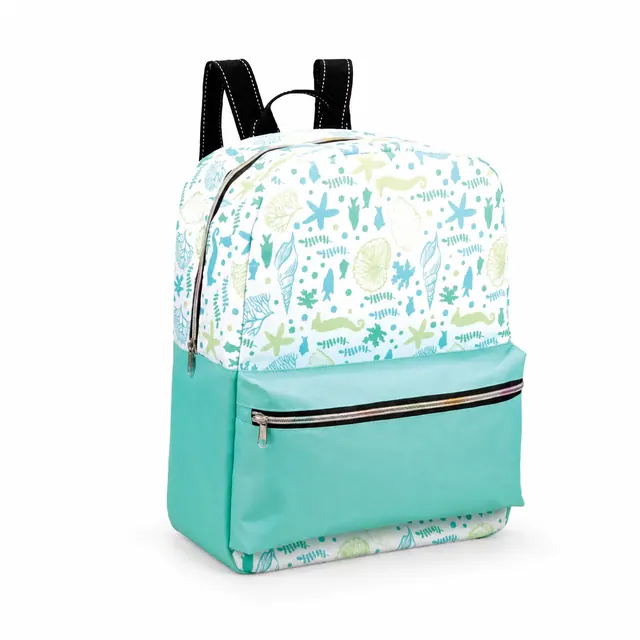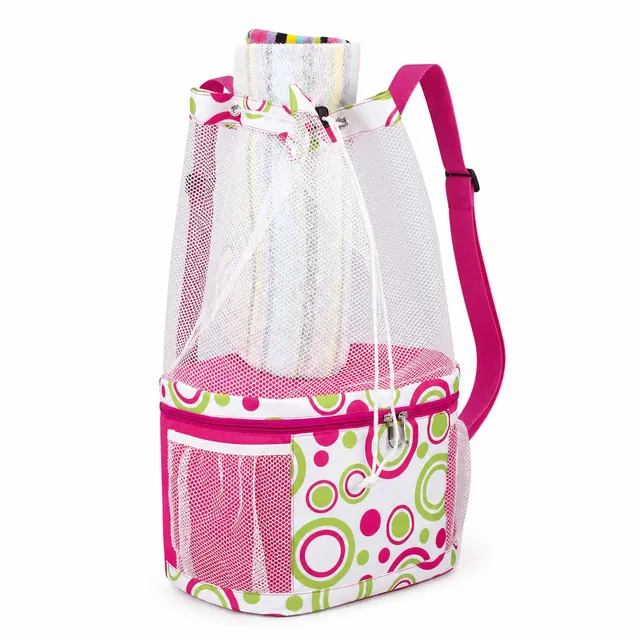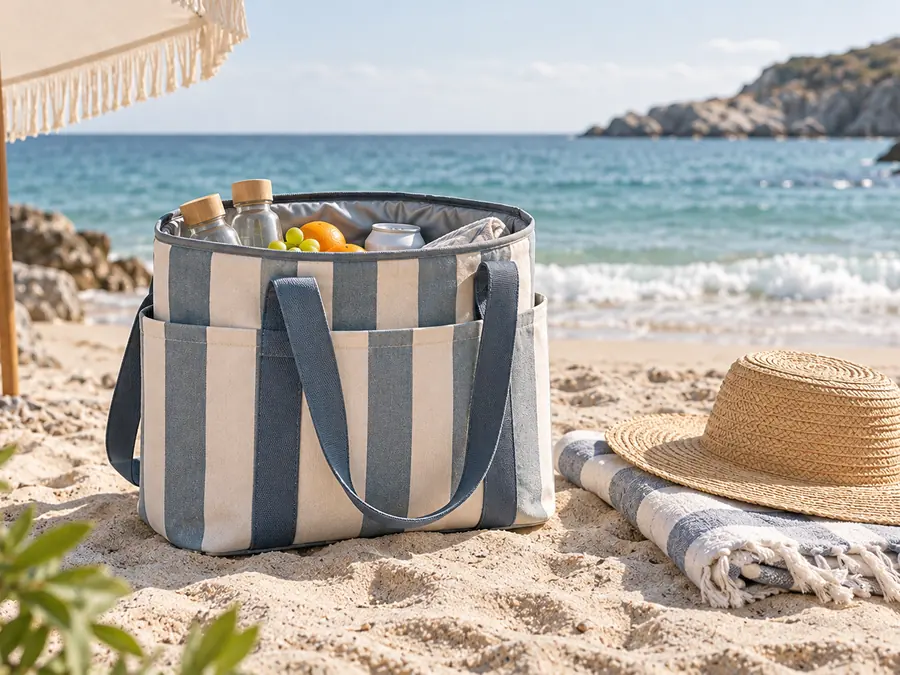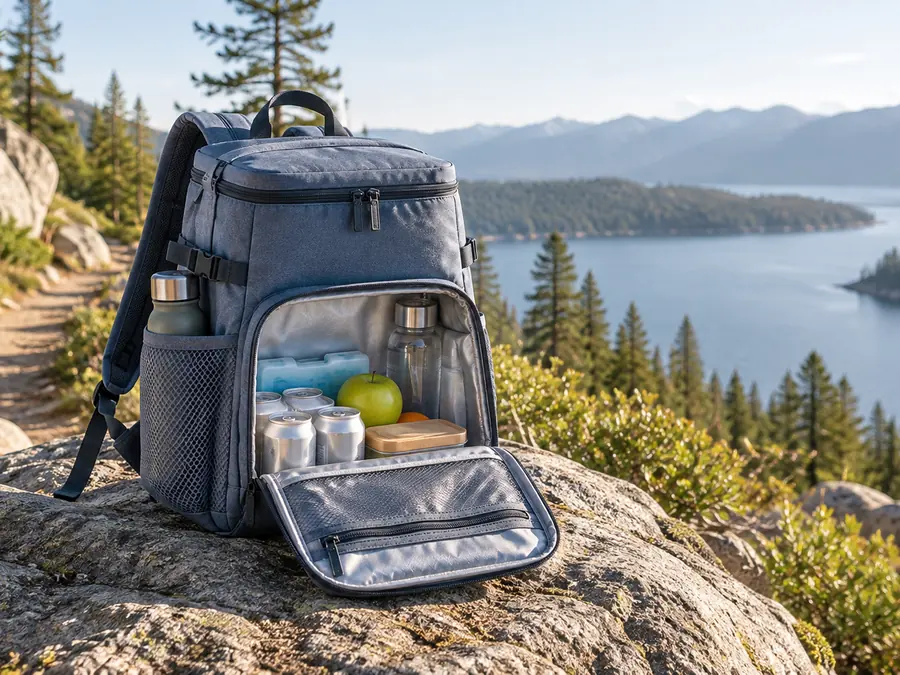
A good backpack cooler combines a continuous foam wall (10 mm minimum, 15–20 mm for all-day use), a welded leak-proof liner, a zip with a storm flap, and padded straps built to carry 8–10 kg. Size it from the insulated compartment, not the outer dimensions. With two gel packs, a 10 mm wall holds refrigerated food below 8 °C for roughly 6–8 hours at 25 °C.
A backpack cooler solves one problem that a tote cooler cannot: it lets someone carry cold food and drink a long way with both hands free. Because it is carried further and fuller, a badly specified one comes back as a return — the straps tear, the liner leaks into the back panel, or the bag is warm by lunchtime.
This guide, from the Eggroll Bags export desk, covers what separates a good backpack cooler bag from a disappointing one, how to size it honestly, and what to put in a brief if you are developing your own.
What makes a good backpack cooler?
The best backpack cooler is the one whose insulation, liner and carry system are all built for the load it will really carry.
Five things decide whether a design works:
- A continuous insulated wall. Foam should run around all sides, the base and the lid with no uninsulated seams. Gaps at the zip line and the base corners are where most heat gets in.
- A leak-proof liner. A heat-welded PEVA or TPU liner holds meltwater; a stitched liner usually does not. On a backpack that matters more than on a tote, because a leak runs straight onto the wearer's back.
- A closure that seals. A storm flap over the main zip, or a roll-top on waterproof styles, cuts warm-air exchange every time the bag is jostled.
- A carry system sized for weight. Liquids are heavy. Straps, bar-tacks and the back panel need to be specified for a full load, not for an empty sample.
- Honest capacity. Capacity should be quoted for the insulated compartment, not the outer shell including pockets.
Our guide to cooler bag insulation explains the foam and liner options in more depth.
Cooler backpack types compared
There are four common constructions, and buyers often mean different ones when they say "insulated backpack". Choose the type first, then the size.
| Type | How it is built | Typical use | Trade-off |
|---|---|---|---|
| Full cooler backpack | The whole main body is one insulated compartment with a welded liner | Beach, fishing, day trips, events | Maximum cold space, but nowhere dry for a phone or towel unless you add outer pockets |
| Backpack with cooler compartment | An insulated lower or rear section plus a dry upper section | Hiking, work commute, family days out | Smaller cold volume; the dividing panel must be insulated too |
| Lunch box backpack | A compact insulated pack, often with a bottle pocket and organiser | Work lunch, school, adult commuters | Sized for one person's food, not drinks for a group |
| Chair cooler backpack | A cooler bag mounted on a folding stool or chair frame | Fishing, sports sidelines, camping | Heavier and bulkier; the frame adds cost and freight volume |
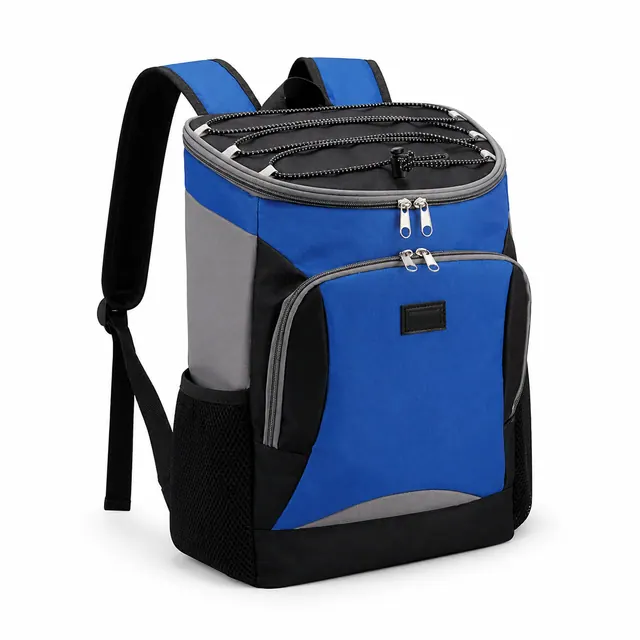
Our insulated backpack cooler bag (30.5 × 15.5 × 39.5 cm, 600D with microfiber) is a mid-size full cooler format, the thermal insulation picnic backpack (53 × 22 × 51 cm) is a large group-day model, and the insulated lunch backpack with bottle pocket is a work and commuter lunchbox backpack. For fishing and sideline use, the cooler backpack with folding chair combines both functions.
How long does a backpack cooler keep things cold?
With a 10 mm EPE foam wall, a welded leak-proof liner and two gel packs, a soft cooler holds refrigerated food below 8 °C for roughly 6–8 hours at 25 °C ambient. Thicker walls, a storm flap and a light outer colour extend that.
These are design ranges, not a guarantee. Real performance depends on how full the bag is, how often it is opened, whether the contents went in cold, and whether it sits in direct sun. For all-day beach or fishing use, we recommend 15–20 mm walls.
If your marketing will make a cold-hold claim, we can run a timed temperature test on your approved sample, so the claim on the hang tag reflects your actual construction rather than a number copied from somewhere else.
How to size a backpack cooler honestly
Size from the inside. Subtract the wall thickness on every side from the outer dimensions, then calculate litres and can capacity from what is left.
Here is a worked example using simple arithmetic. Take an outer body of 30.5 × 15.5 × 39.5 cm with a 10 mm wall. The inner space is roughly 28.5 × 13.5 × 37.5 cm, about 14.4 litres if the whole body is the insulated compartment. A standard 12 oz can is about 6.6 cm across and 12.2 cm tall, so the base fits 4 × 2 = 8 cans and the height fits 3 layers: 24 cans with no ice. Add two gel packs and a realistic figure is 16–20 cans.
- Thicker walls cost capacity. Going from 10 mm to 20 mm on the same outer shell removes another 2 cm from every dimension, a meaningful loss on a small backpack cooler.
- Weight adds up quickly. A full 12 oz can weighs roughly 0.37 kg, so 24 cans is close to 9 kg before ice. That is the load the straps and seams must be built for.
A specification that states inner dimensions and a can count with gel packs included is the one that survives customer reviews.
Is a backpack cooler waterproof or just leak-proof?
Leak-proof means the liner holds meltwater in; waterproof means the outer shell keeps rain out. Most soft-sided cooler backpacks are leak-proof inside and water-resistant outside, and the copy should say so.
A welded liner with no stitch holes is the core of leak resistance. The outer fabric is usually PU- or PVC-coated polyester, which sheds water well; a fully waterproof backpack cooler for boats or kayaks needs TPU-coated fabric, welded outer seams and a roll-top or waterproof zip, which is a different and more expensive construction.
On cooler orders we run a liner leak test on site — 1 litre of water left in the liner for 10 minutes — alongside zip cycle and handle pull tests during pre-shipment inspection.
Carry comfort: straps, back panel and hardware
A cooler backpack is judged on the walk back to the car, still heavy. Specify the carry system for the full load.
- Shoulder straps: padded, around 5–6 cm wide at the shoulder on larger models, with bar-tacks where they join the body.
- Back panel: padded or mesh-covered, and kept separate from the cold compartment so condensation does not soak the wearer's shirt.
- Grab handle: reinforced, because people lift a full bag by the top handle more than by the straps. Our handle pull test is 5 kg held for 60 seconds.
- Zip: a larger gauge on the main compartment; small zips fail first on cold bags because people force them closed over a full load.
Styles that sell: beach, fishing, camo and work
The same core construction can be styled for very different shelves.
- Beach cooler backpack: light outer colours to reflect sun, sand-shedding fabric, a dry front pocket for phones and keys.
- Fishing backpack with cooler: darker or camouflage prints, rod-holder loops, a wipe-clean base, and often a chair frame.
- Camo backpack cooler: camouflage is a fabric choice — a printed 600D or sublimated polyester handles most patterns.
- Lunch backpack for work: smaller and neater, with a dry section and a bottle pocket; neutral colours suit adult commuters.
For a custom backpack cooler with a logo, a woven label or patch on the front pocket usually outlasts a print on a curved panel.
How to specify a custom cooler backpack
A clear brief gets a comparable quote on the first round. Use this checklist:
- Use case and target retail price. Beach, fishing, work lunch or general outdoor; this sets everything else.
- Type. Full cooler, split compartment, lunch box backpack or chair cooler.
- Inner dimensions and target can count, stating whether gel packs are included.
- Insulation: foam type and wall thickness, for example 10 mm or 15 mm EPE.
- Liner: PEVA, TPU or foil; welded or stitched; whether food-contact migration testing is needed for your market.
- Outer fabric: denier, weight in g/m², coating, and a Pantone TCX or TPG reference.
- Carry system: strap width, padding, sternum strap, back panel material.
- Pockets and hardware: dry pockets, bottle holder, zip gauge.
- Decoration: method, position, size and Pantone C reference for print.
- Compliance: REACH, Prop 65 or other test reports needed in your name.
MOQ, samples and lead time for custom backpack coolers
For a catalogue model our MOQ is 500 pieces per colour; for a new pattern or custom-dyed colour it is 1,000 pieces per colour. A counter sample takes 7–12 days, and the fee is credited against the bulk order.
Bulk production runs 25–35 days after sample approval, with about a week added during the July–October peak season. Sea freight to North Europe or the US East Coast takes 28–40 days. Partner-factory production gets inline checks at 20% and 80% and a pre-shipment inspection to ISO 2859-1 General Level II, AQL 2.5 major and 4.0 minor.
Browse the full cooler and insulated bag range to find a starting model, or send us your backpack cooler brief for a written reply within one working day.
Frequently asked
Are backpack coolers worth it?
For anyone carrying food and drink more than a short distance, yes. A backpack cooler spreads the load across both shoulders and frees the hands, which a tote cooler cannot do. For short car-to-picnic-table trips, a basket or tote cooler is often better value.
How long do backpack coolers keep ice?
It depends on wall thickness, liner, closure and conditions. As a design range, a 10 mm EPE foam wall with a welded liner and two gel packs keeps refrigerated food below 8 °C for roughly 6–8 hours at 25 °C. Thicker 15–20 mm walls, a storm flap and a light outer colour extend that; direct sun and frequent opening shorten it.
What size backpack cooler should I choose?
For one person's lunch and drinks, 8–12 litres is usually enough. For two to four people on a day out, 18–25 litres is typical. Always check the inner dimensions: subtract the wall thickness on every side and count cans with gel packs in place, because outer measurements overstate the usable space.
Are backpack coolers waterproof?
Most are leak-proof inside and water-resistant outside. A welded liner holds meltwater, and a PU- or PVC-coated outer fabric sheds rain. A fully waterproof cooler backpack for boats or kayaks needs TPU-coated fabric, welded outer seams and a roll-top or waterproof zip, which is a separate and more expensive construction.
Can I order a custom backpack cooler with my own logo?
Yes. On a catalogue model the MOQ is 500 pieces per colour, and the logo can be screen printed, heat transferred, sublimated, embroidered, or applied as a woven label or patch. A new pattern or custom colour moves the MOQ to 1,000 pieces per colour. A counter sample takes 7–12 days.
What is the difference between a lunch backpack and a cooler backpack?
A lunch backpack is sized for one person's meal, often with a dry section for personal items, a bottle pocket and organiser pockets. A cooler backpack gives most or all of its body to an insulated compartment for drinks and food for several people. The construction principles are the same; the proportions differ.